







Architect · Research Builder · Believer
Founder Director @ Kopano Labs · CPUT student · Cape Town, South Africa 🇿🇦


✝️ Jesus is King.
I want the things I build to serve people before they impress people.

I build software, AI systems, games, governance protocols, financial agents, robotics experiments and strange little research machines from Cape Town.
But the thread underneath all of it is becoming clearer:
How do we give intelligent systems more capability without giving up human authority, identity, accountability, memory or truth?
I started by building applications. Then I became obsessed with what happens when software remembers, acts, coordinates, changes the world, and has to explain why it did so.
That is where most of my work lives now.
I care about people who do not have perfect infrastructure, perfect bandwidth, perfect devices, perfect credentials or time to decode a complicated interface. South African realities — unemployment, transport cost, township infrastructure, education, small business, safety and opportunity — are not “edge cases” in my work. They are design inputs.
The current research direction is moving beyond “which AI model is smartest?”
MODEL      = capability
INTERFACE  = embodiment
SEAT       = authority
IDENTITY   = accountability
GOVERNANCE = continuity
A model can change. A UI can change. A vendor can change.
The harder question is whether identity, authority, context, evidence and responsibility survive the change.
That is why I increasingly treat models as swappable capability layers rather than the owner of the system.
PERSISTENCE × CONSISTENCY × CONTEXT
                ↓
       GOVERNED CONTINUITY
This is the research spine connecting KPGS, Project Jennifer, RUNE, Aya, LEFA, Digital Hippocampus, PKA, MMAO/MAO and the wider Kopano Labs estate.
You do not need to understand my architecture vocabulary to enter the work.
| If you are here to… | Start here |
|---|---|
| Use something | 🌍 KasiLink · ⚽ Five’s Arena · 🎮 Starfall Salvage · 💸 LEFA |
| Explore a world | 💜 Project Jennifer · 🎨 AMAPHU |
| Build with me | 🧠 Kopano Context / KPGS · 🛡️ Project RUNE · 🧰 Agent Skills |
| Study the research | 🧬 Project Jennifer architecture · 🧾 RUNE standards map · 🧠 Introduction-to-MCP |
| Talk / collaborate | 🤝 LinkedIn · 🌐 KRRababalela.com |
| System | What I’m testing | Current public truth |
|---|---|---|
| Kopano Context / KPGS | Persistent context, authority, orchestration, receipts, POCvsFOC and multi-agent governance. | ACTIVE CORE |
| Project Jennifer | Can relationship, world state and consequence become persistent, playable and auditable? | PLAYABLE LOVE LOOP · R&D |
| Project RUNE | Can agent↔agent coordination and identity claims require independent endorsement instead of assumed-safe consensus? | REFERENCE MVP |
| LEFA-AI | Governed financial intelligence with bounded execution, zero-trust controls, receipts and evidence-backed agent chains. | GOVERNED POC VALIDATED |
| Ayakha / Aya | A local-first multimodal design companion that can help a learner move from intent → brief → approved Canva / SolidWorks change. | MVP TRUTH-LOCKED |
| Cars4Mars | Rover safety, telemetry, simulation, edge perception and physical validation. | DESIGN → BUILD |
| KasiLink | Township-first work discovery where distance, trust and infrastructure are product logic. | LIVE |
| Five’s Arena | Real venue operations, booking truth, adaptive UX and resilient mobile flows. | PRODUCTION |
| AMAPHU | Governed entertainment across interactive media, game, music and visual worlds. | PHASED BUILD |

The telemetry card tracks a selected core product estate. The research radar above is intentionally broader.
Project Jennifer has evolved hard.
It is now centered on Jennifer City: a web-first companion-consequence RPG about relationships, memory and governed intelligence. Tactical combat remains a long-term direction; the present product proof is a loved continuity loop.
CHOICE
  ↓
CONSEQUENCE
  ↓
RECEIPT
  ↓
PERSISTENCE
  ↓
THE NEXT SCENE REMEMBERS
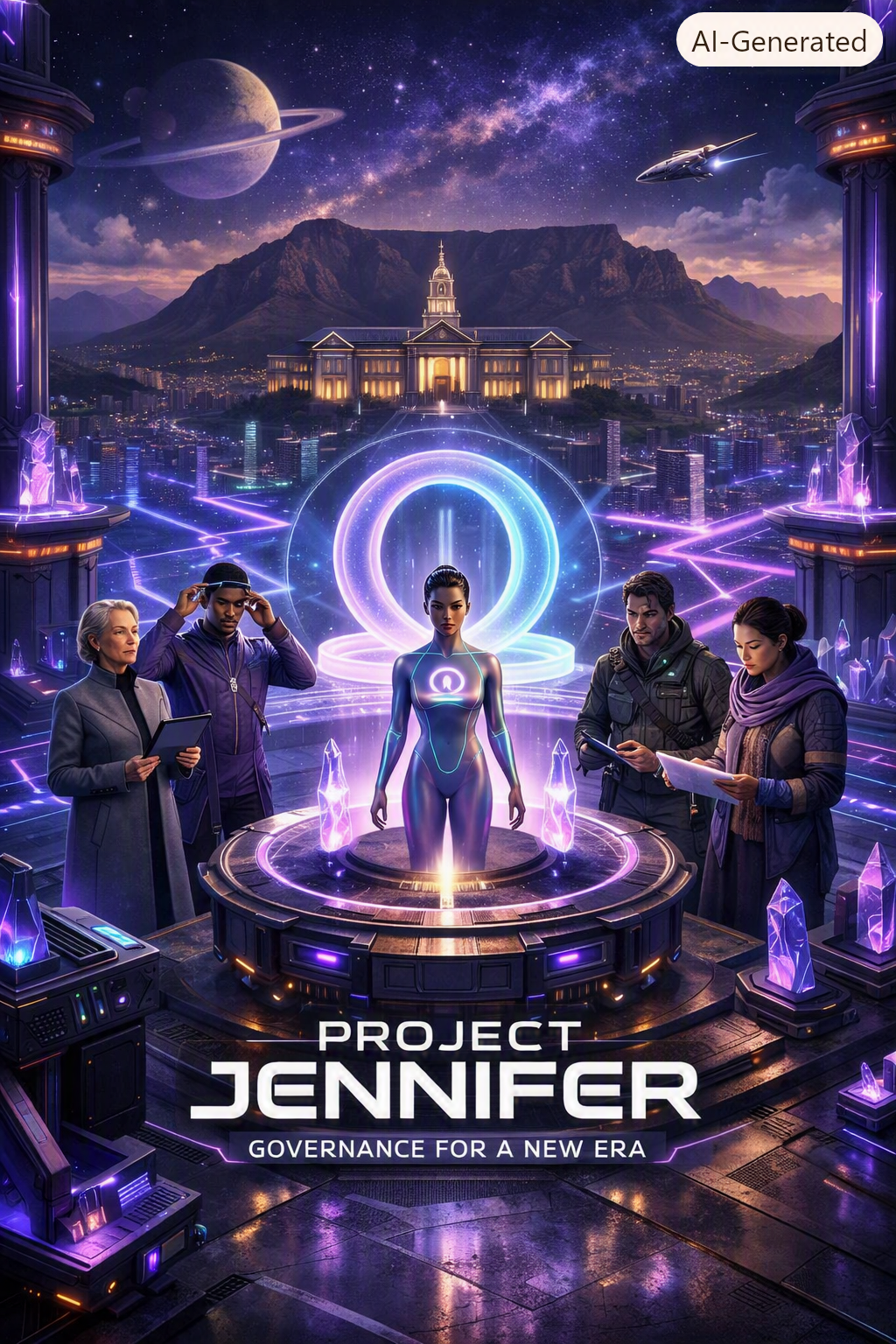
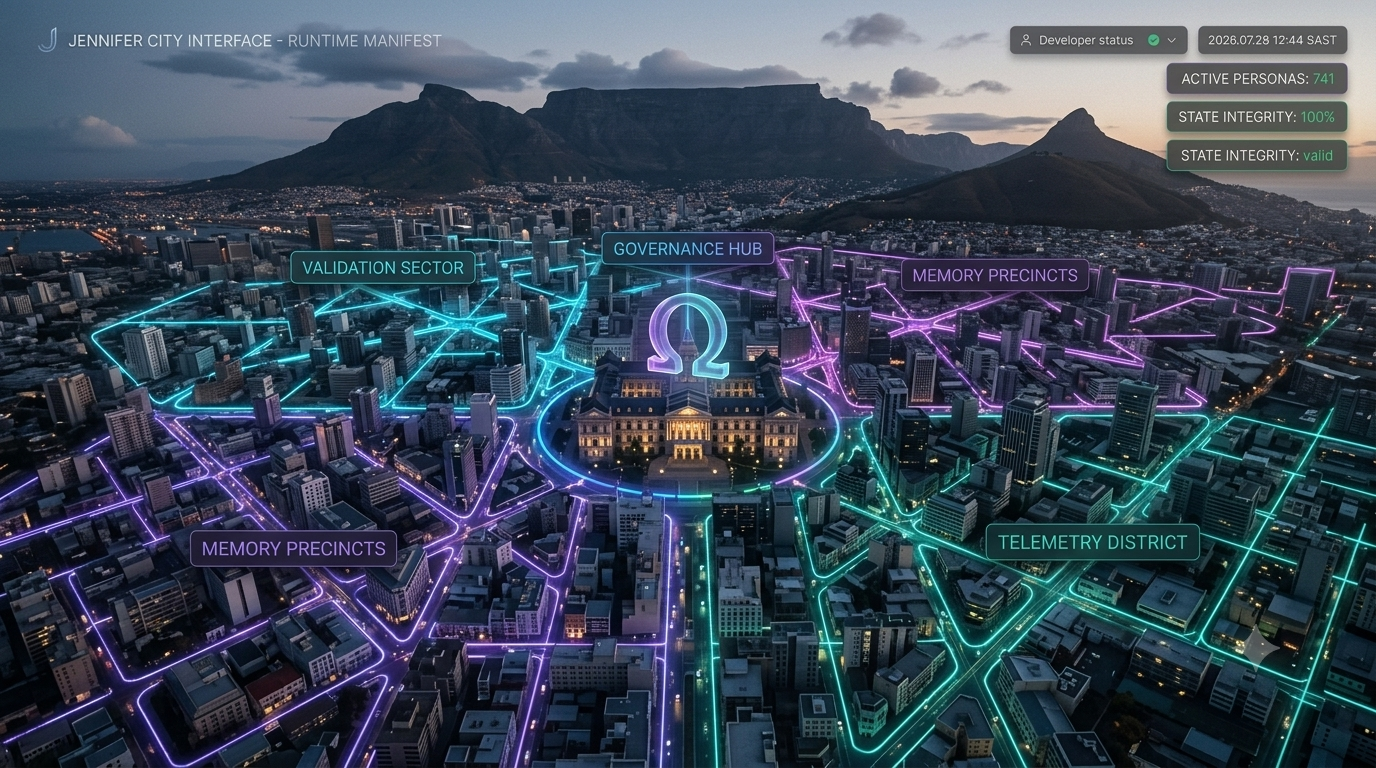
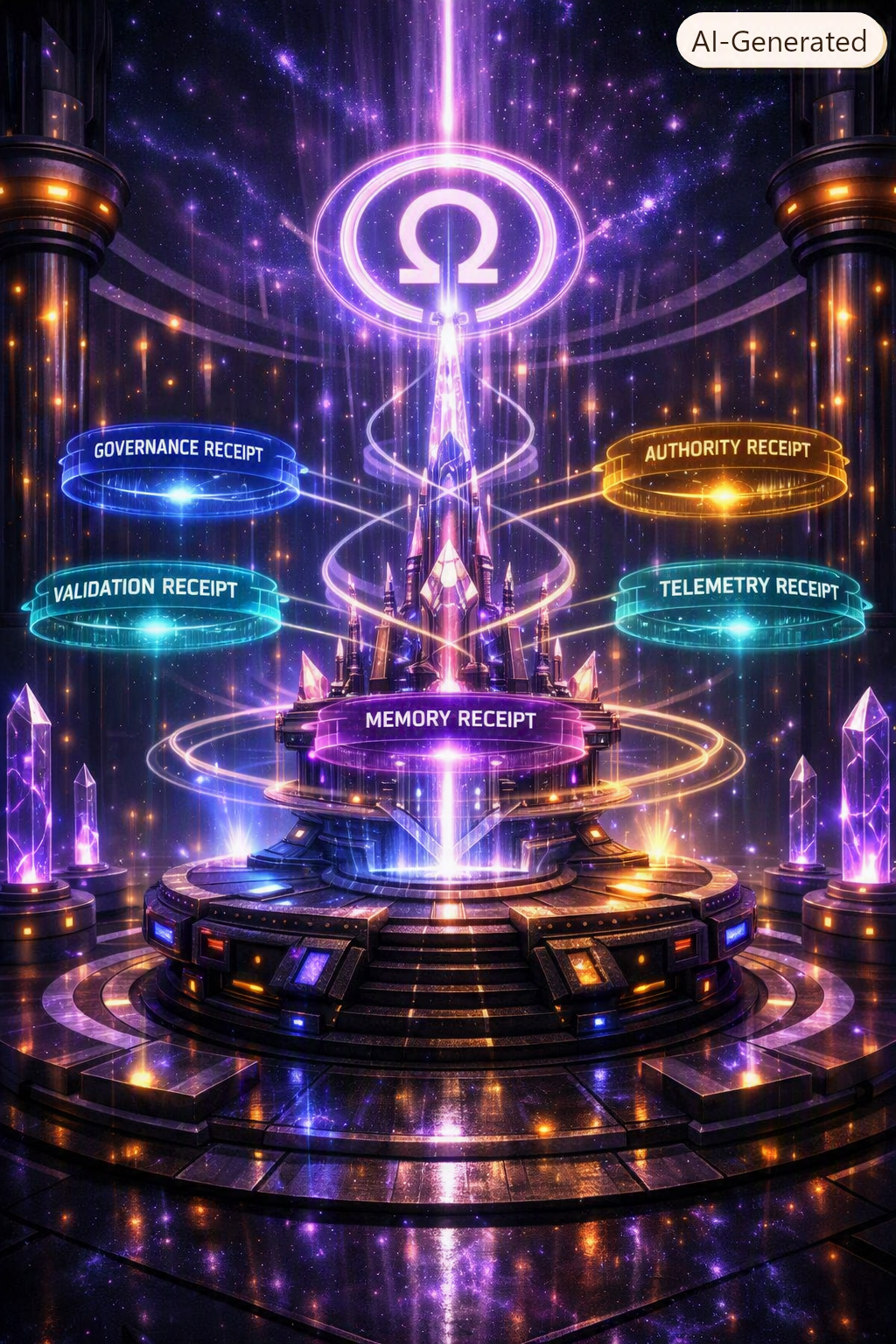

The current repository proof now includes a CI-gated love loop, playable Memory District / Telemetry Tower work, a Third Signal episode, local-first continuity, epistemic disagreement, and a same-browser Continue path designed to survive API failure.
That matters to me because I do not want AI characters that only sound like they remember you. I want the system to distinguish story, memory, inference, authority and evidence.



RUNE — Runtime Unified Network Endorsement is my current public research product for a very specific problem:
Multi-agent coordination is not the same thing as verified safety.
RUNE treats agent coordination events and identity claims as things that can be independently endorsed, rejected, revoked and receipted — rather than trusting agreement because several agents voted the same way.
The public repo is intentionally honest about status: reference MVP, scaffold + fail-closed gate. It is not marked complete, proven or demo-ready without owner verification receipts.
MCP  → agent ↔ software tools
MHS  → agent ↔ physical hardware
RUNE → agent ↔ agent coordination / identity claims
KPGS → wider governance authority + continuity


The more I build, the more I care about heavy architecture disappearing behind a humane interface.
Aya is a local-first multimodal design-thinking desktop companion for students and makers.
The MVP is deliberately narrow: speak, type, sketch or show an intention → clarify missing requirements → create an explainable brief → make one approved Canva change and one approved SolidWorks change.
The point is not “AI does CAD for you.” The point is a learner staying in control while the system helps them think, make and understand.
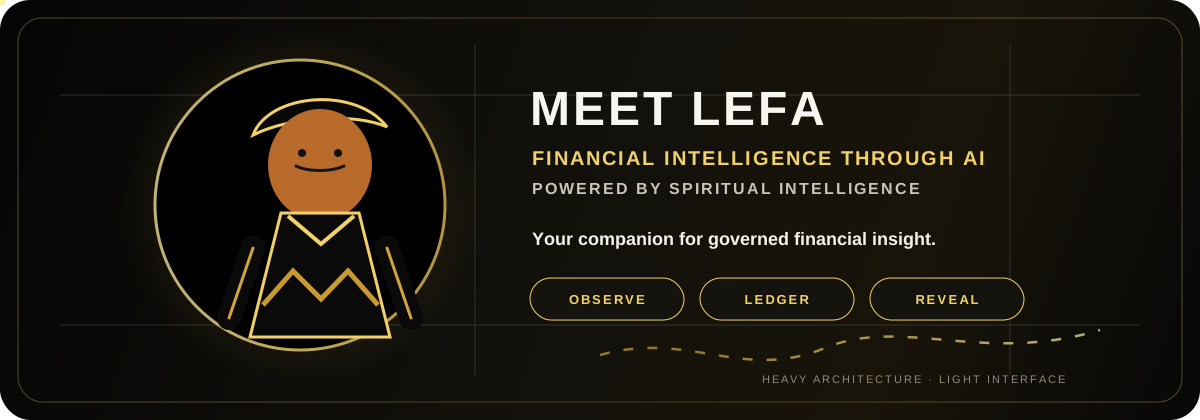
LEFA asks a similar question in finance:
Can one human-facing intelligence receive messy intent, use governed internal agents and real financial evidence, preserve uncertainty, and make a decision that time can later validate?
Its current lane includes zero-trust middleware, bounded paper-execution authority, evidence-backed chains, ADK work, risk gates and receipts. Live trading is not silently promoted from a demo.
A lot of my repositories are separate products, but the research is converging.
HUMAN INTENT
    ↓
IDENTITY ── who is acting?
    ↓
SEAT ────── what authority do they hold?
    ↓
CONTEXT ─── what should persist?
    ↓
GOVERNANCE ─ what may change?
    ↓
EVIDENCE ─── what proves it?
    ↓
RECEIPT ──── what survives the session?
    ↓
ACTION / WORLD CHANGE
    ↺
Current research lanes include:
- KPGS / GSMB — governance continuity across stateless model sessions.
- Digital Hippocampus — persistent context, provenance and memory architecture.
- PKA / POCvsFOC — bounded uncertainty and an immune system for false closure.
- MMAO / MAO — multi-agent orchestration with human authority held outside agent consensus.
- RUNE — independently endorsed coordination and identity claims.
- Memory Receipts — making consequence inspectable in Project Jennifer.
- Source Authority — relevance is not the same as permission, canon or truth.
- Zero-trust agent systems — fail closed, minimize authority, preserve evidence.
- MCP / WebMCP / ADK / portable skills — reusable interfaces for agents without surrendering governance to one vendor.
- Embodied and spatial computing — Three.js, Blender, robotics, voice interfaces and physical-tool control.
OPEN // The doctrine I keep returning to
POC BEFORE NARRATIVE
RECEIPTS BEFORE CLAIMS
SOURCE AUTHORITY BEFORE RETRIEVAL CONFIDENCE
GOVERNANCE BEFORE DRIFT
UNKNOWN IS A VALID STATE
FAILURE MUST LEAVE A RECEIPT
MODEL CAPABILITY DOES NOT EQUAL SYSTEM AUTHORITY
CONSENSUS DOES NOT EQUAL ENDORSEMENT
The point is not bureaucracy.
The point is to let systems become more powerful without becoming less inspectable, less accountable or less human.
I am building from South Africa, not from an abstract “ideal user” diagram.
I think about:
- the student with an idea but no expensive workstation;
- the graduate with skills but no clear opportunity path;
- the township business that cannot afford wasted transport or data;
- the founder who needs software to tell the truth when a provider is down;
- the designer who wants AI help without surrendering authorship;
- the person using financial intelligence who deserves boundaries, not magic language;
- the developer who needs to inspect what the agent actually did.
That is why I keep coming back to offline-first, low-data, local-first, governed, reversible and evidence-backed systems.
Technology should increase agency.





I use OpenAI, Anthropic, Google, Microsoft, AWS, Hugging Face and open-source models/tools where they fit.
I do not want vendor lock to become architecture. The model is a capability provider; the system still needs its own identity, authority, memory and governance.
I am still a student while building all of this.
Some days I am writing governance protocols. Some days I am debugging a rover. Some days I am learning Blender from the beginning, studying algorithms, reading about Fourier optics and holography, or trying to understand why a CI gate exploded at 20:00 on a Sunday. 😭
I like that tension.
I do not want to become the kind of builder who can explain a system beautifully but has stopped being teachable.


If you are a student, researcher, founder, designer, developer, investor, community builder or simply curious human, you do not need the perfect introduction.
If something here makes you think “wait… what are you doing over there?” — that is a good enough reason to talk. 🙂


Build for people. Tell the truth. Leave receipts.
From Cape Town outward.
Living profile · major evolution: September 2026