




Mechanical engineer. Powertrain, ECUs, CubeSat deployment. Asking spacecraft inconvenient questions.
BTech Mechanical Engineering, Symbiosis Institute of Technology, Pune, 2023-2027
In 2021 I got stuck on a dumb question: why do we still deploy CubeSats with springs. I never really got unstuck. That question is now VOLLEY: an electromagnetic deployer that ejects unmodified 3U CubeSats at a programmable velocity from a spent rideshare upper stage. I've presented it at DRDO ARDE and the India Science Festival.
Before that there was rocketry, where our payload took 2nd globally at the SDL Payload Challenge, IREC 2025 in Texas. Alongside it there are engines, I run Poona Motor Club, tune Royal Enfield, KTM and Honda platforms, and when Powertronic's map files turned out to be an obfuscated binary I reverse-engineered the format and built a dual-map editor so I could stop guessing. This year I'm on powertrain for our Formula Student team.
Aerospace, telecom software, engines. I have a hunch they all come from the same place. Haven't proven it yet.
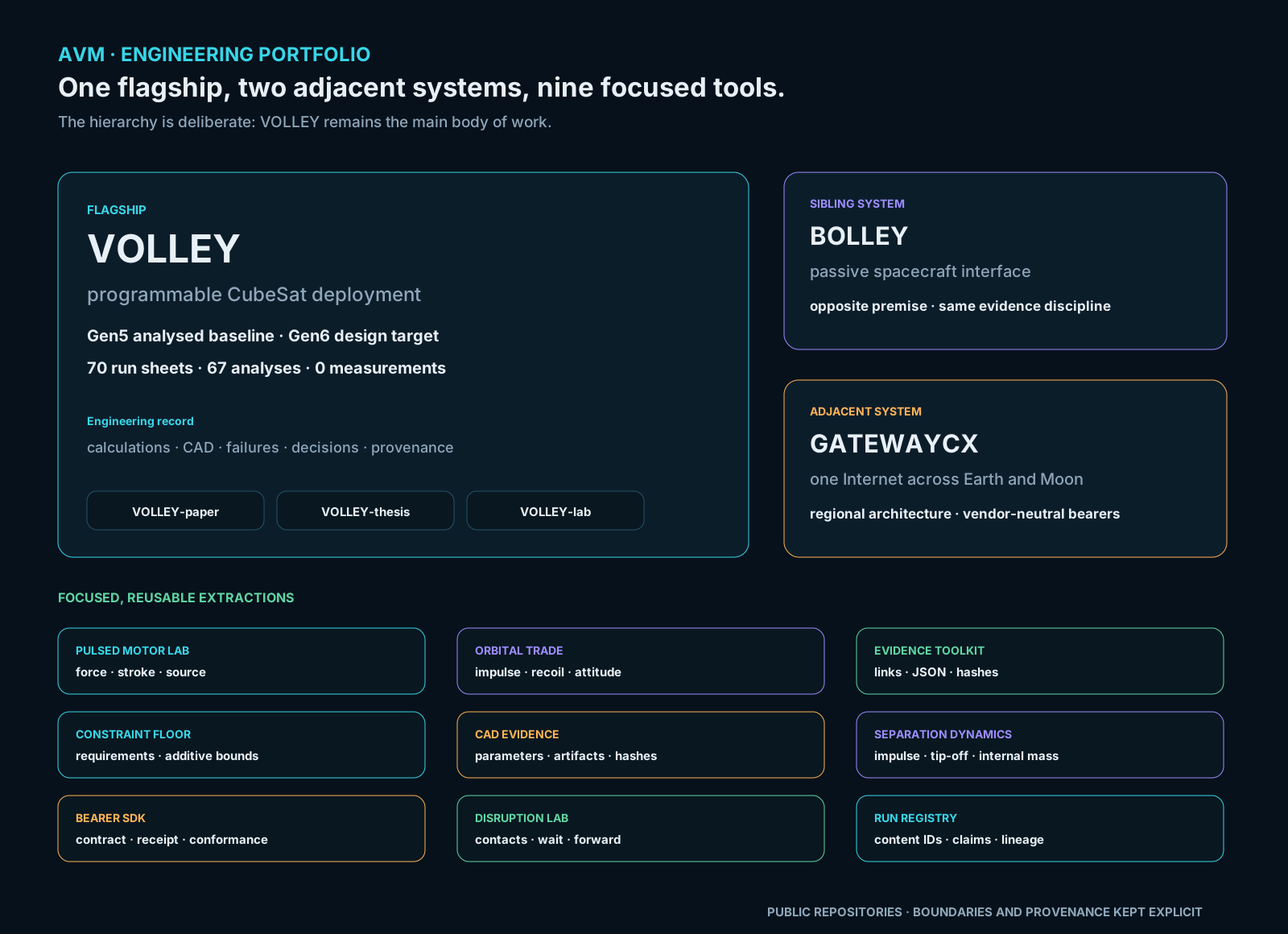
The map is generated in the profile repository. Its proportions are the point: VOLLEY is the flagship; the other repositories either test a neighbouring premise or extract one reusable part of its engineering method.
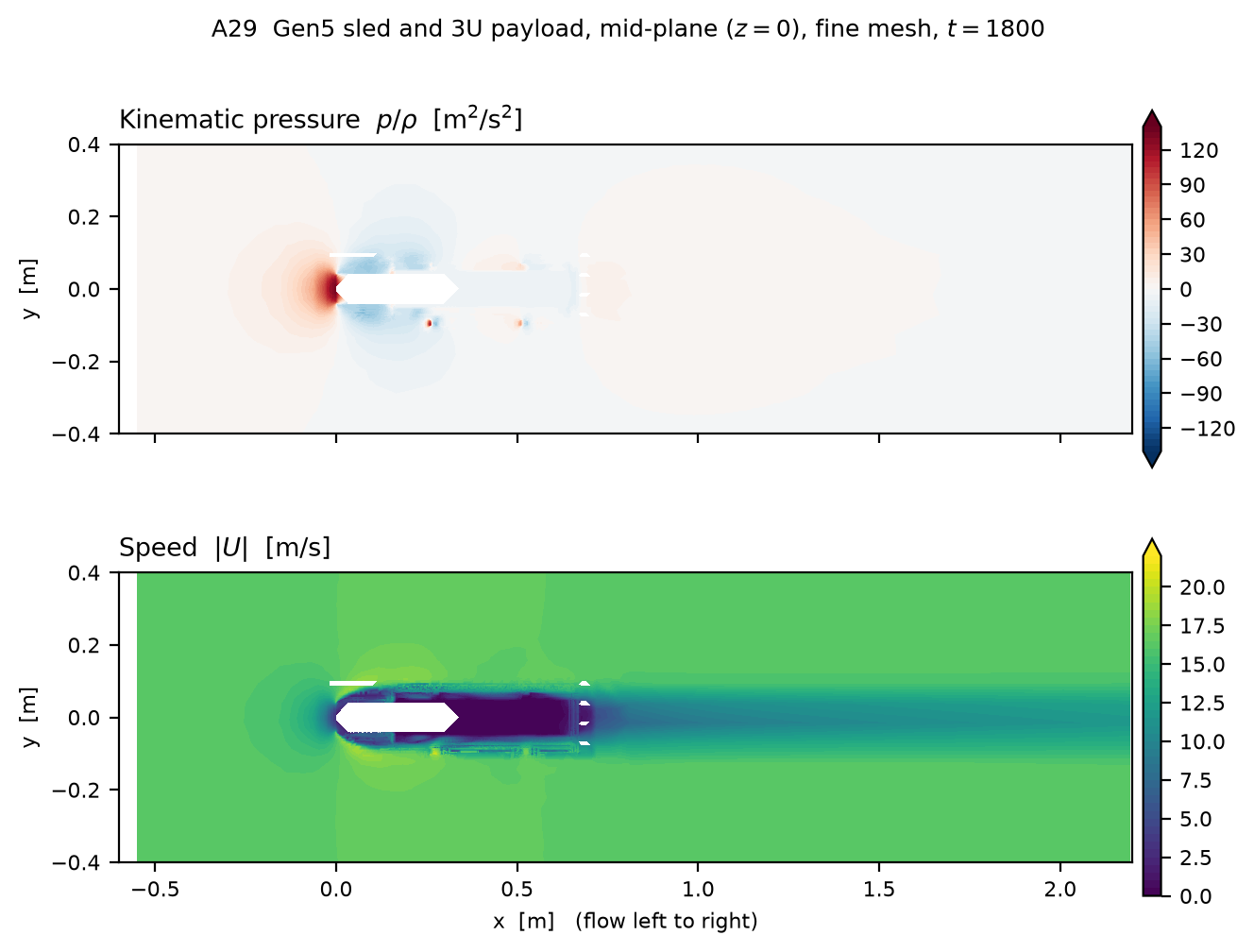
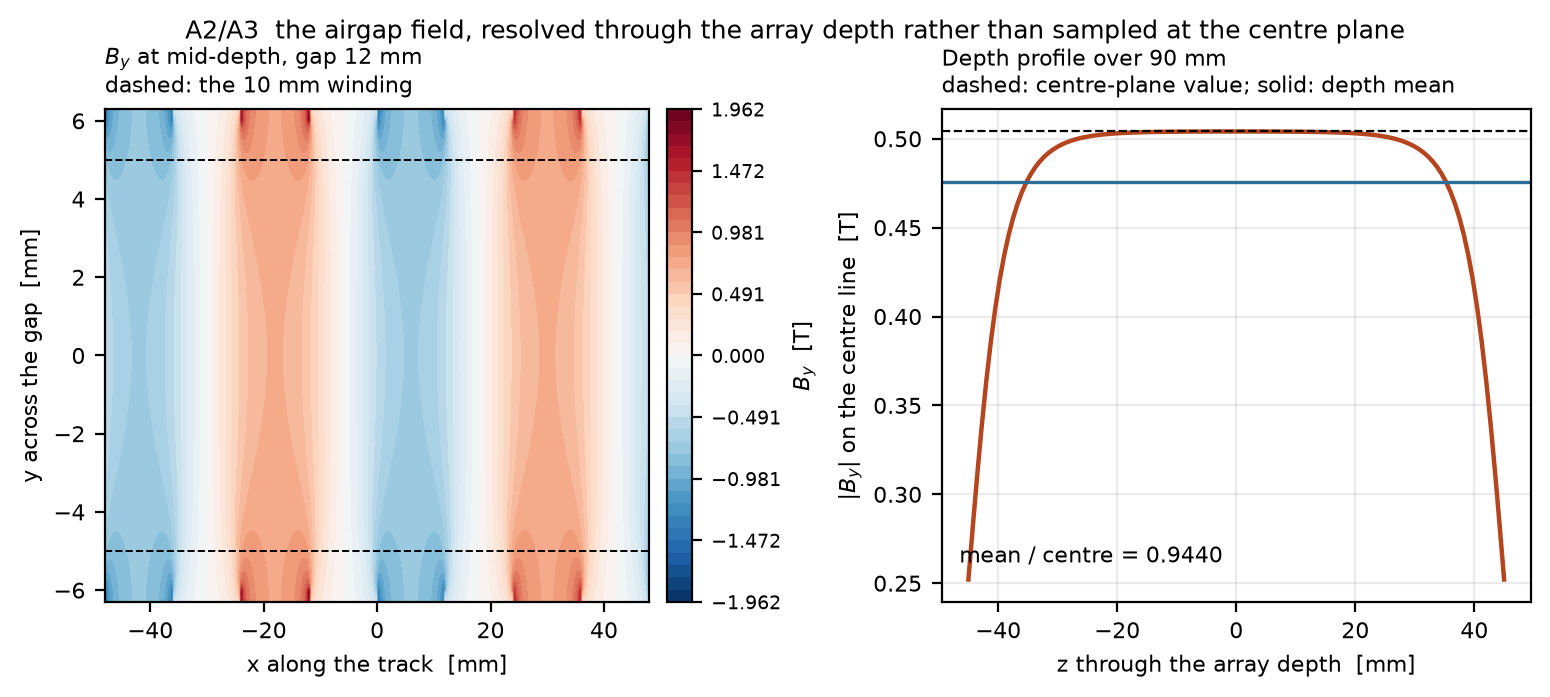
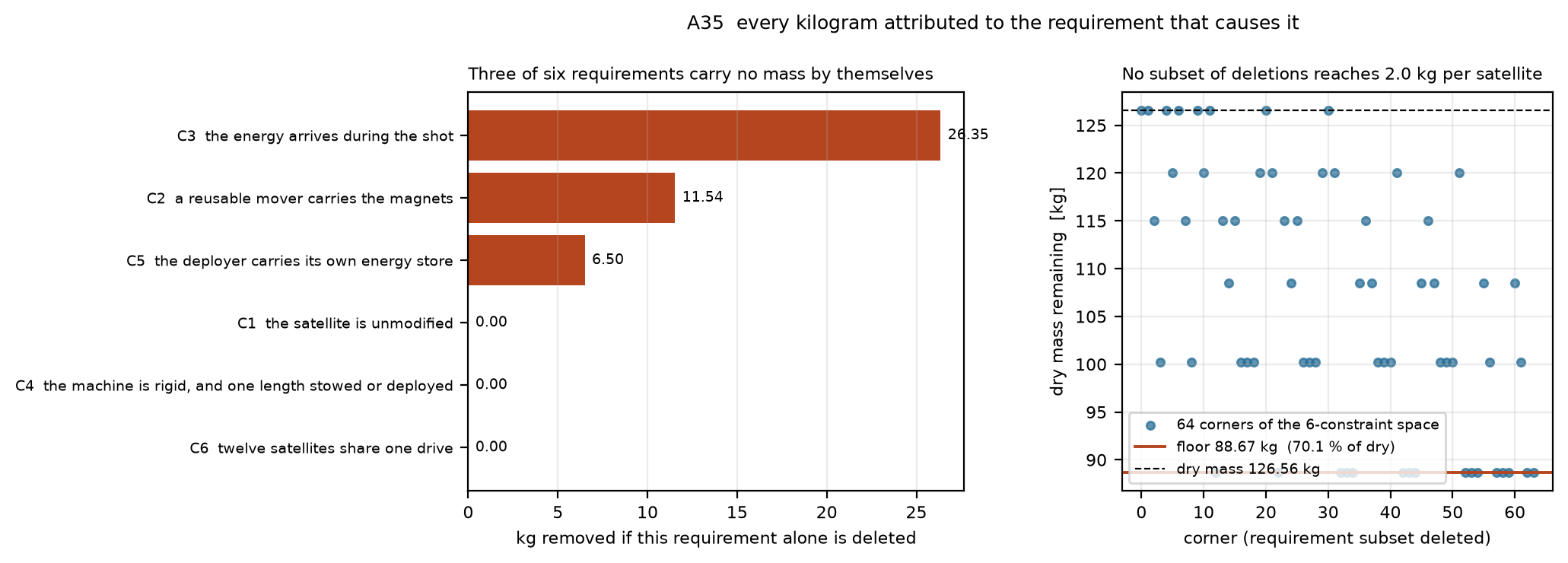
External aerodynamics in OpenFOAM, 581 779 cells · the Halbach airgap field resolved through the array's 90 mm depth · every kilogram attributed to the requirement that causes it. All three are model output. Nothing in the project has been built, fired or measured — and the repository leads with that rather than hiding it.
The idea is not really the motor. A launch vehicle's upper stage does its job in ten minutes and then becomes debris; POEM has already flown the counter-example. VOLLEY turns that spent stage into a last-mile delivery vehicle, it repositions between altitude shells on its own reaction control and fires satellites off at individually commanded velocities at each one. Altitude is in; plane change is not, at 133 m/s per degree, and phase is not either, which I found by checking rather than by being told: satellites released minutes apart from the same host separate in true anomaly for no velocity at all, so 30° costs 468 seconds of waiting. What survives is narrower and I think better: a clock changes phase, and a commanded deployment impulse changes orbital energy. Drag and J₂ change orbits too, the point is not that nothing else can, it is that nothing else in a deployment interface can do it per satellite, on command.
VOLLEY, a magazine-fed ironless double-sided Halbach linear synchronous motor that ejects unmodified CubeSats at 16.029 m/s and 10.07 g, drawing 2.78 kJ gross and 2.74 kJ net per shot. TRL 2-3. Nothing built, fired or measured.
The design target has since moved, and the reason is the best result in the project. I attributed every kilogram of the deployer to the requirement that causes it, then deleted every requirement in all 64 combinations to find the lightest machine any relaxation could reach. 88.67 kg survives all of them, 70 % of dry mass, against a 2 kg-per-satellite criterion. There is no version of Gen5 that meets its own mass target. So the target changed from shrinking subsystems to deleting them: the payload accelerated directly, by cold gas, along a rail the spent stage already provides. The architecture that was the target the day before is kept in full, with the analysis that retired it at the top of it.
Gen5 keeps every headline number, because Gen5 is what has the structural FEA, the CFD, the designed control loop and the second CAD implementation behind it. The current direction has none of those and does not inherit them. Both are published side by side rather than one quietly replacing the other.
It proved one thing: a commanded, per-satellite change in orbital energy, on a satellite that is never modified mechanically or electrically. A spring gives every satellite the same push, and its designed differential is exactly zero, that is categorical, and no amount of mass correction touches it.
It lost two arguments to its own analyses, and both are on the front page. Mass parity with a canister of springs is withdrawn: an acceptance band written before the comparison script existed asked for parity within 15 %, and VOLLEY is 1.758x heavier per satellite. So is the constellation-phasing claim, 30° of in-track phase costs 468 seconds of waiting at no velocity cost, so a spring and a clock reach it and this machine is not needed for it.
Open it for the defect record, not the numbers. Every error I've found in my own work is published and numbered, including the ones that damage the claims. An independent propagator falsified a claim in my paper's own abstract; that's logged as P16 rather than quietly dropped. The pulse-power chain does not close on a commercially realistic single supercapacitor string. A covariance claim, an internal-momentum conclusion and the brake-fin thermal model have all been superseded in public.
Acceptance bands are written down before each analysis runs, so a failure cannot be rationalised afterwards. That is not a formality. Twice this month a band failed, I went looking for the design flaw, and found the bug in my own analysis script instead, once a sign convention that had quietly cost 57 km of a delivery envelope, once a limit I had computed for one burn of a two-burn manoeuvre. A band chosen after seeing the answer would have passed both and shipped both.
The most recent one is the flavour of the whole thing: modelling the release properly showed the release was never the problem, the payload arrives in its cradle at 18 to 115 times the tip-off limit at the start of the stroke, which nothing had looked at.
VOLLEY refuses to touch the satellite, and that refusal is expensive, most of the energy goes into launcher hardware, and most of the mechanism exists to stop and return it. BOLLEY asks what happens if I stop refusing: the spacecraft accepts a few hundred grams of passive interface, no power, no electronics, nothing to command, and the launcher deletes the sled, the brake and the return stroke. Same evidence standard, opposite answer to the same question, and it records the branches that failed as carefully as the one that worked.
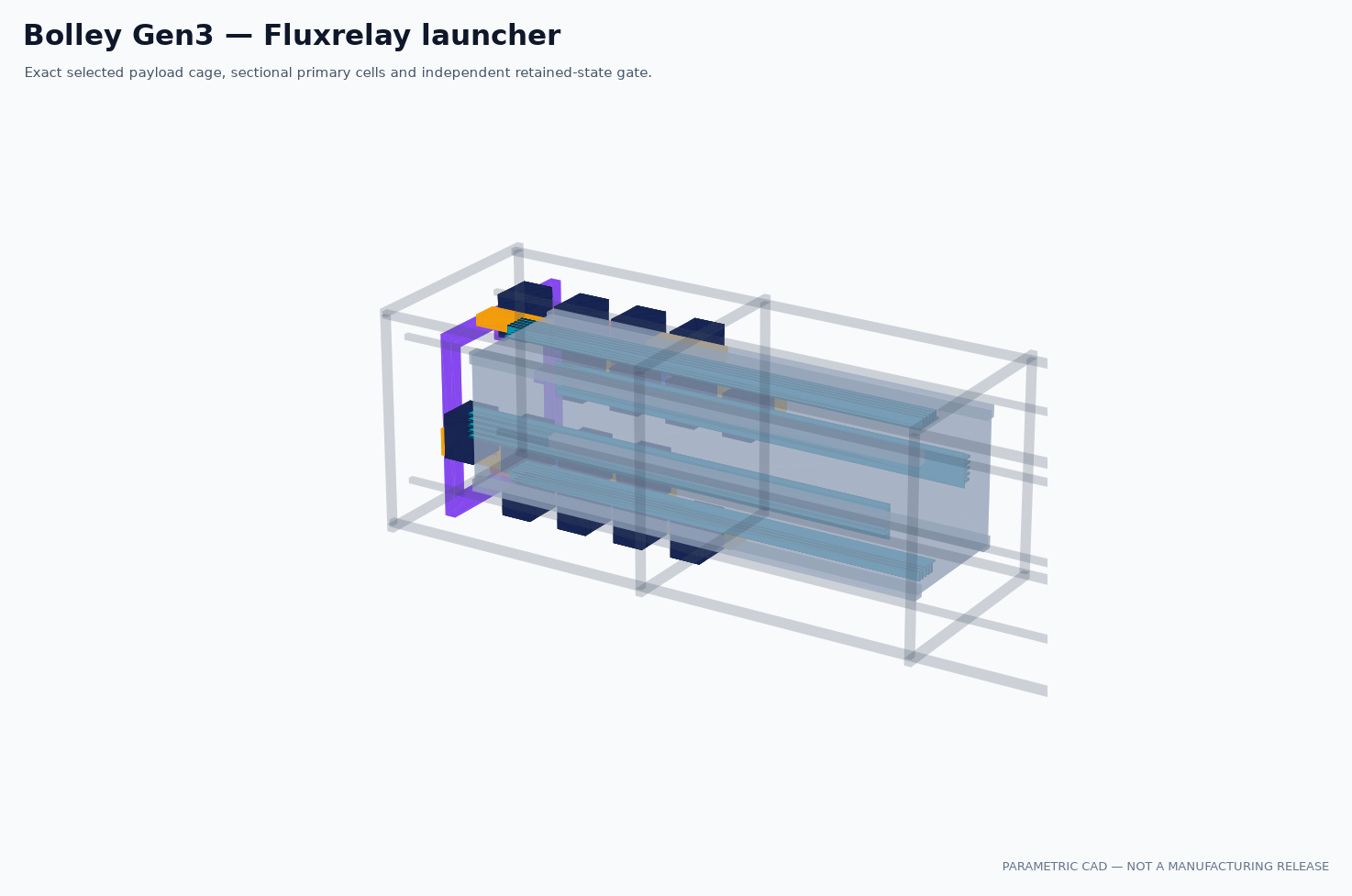
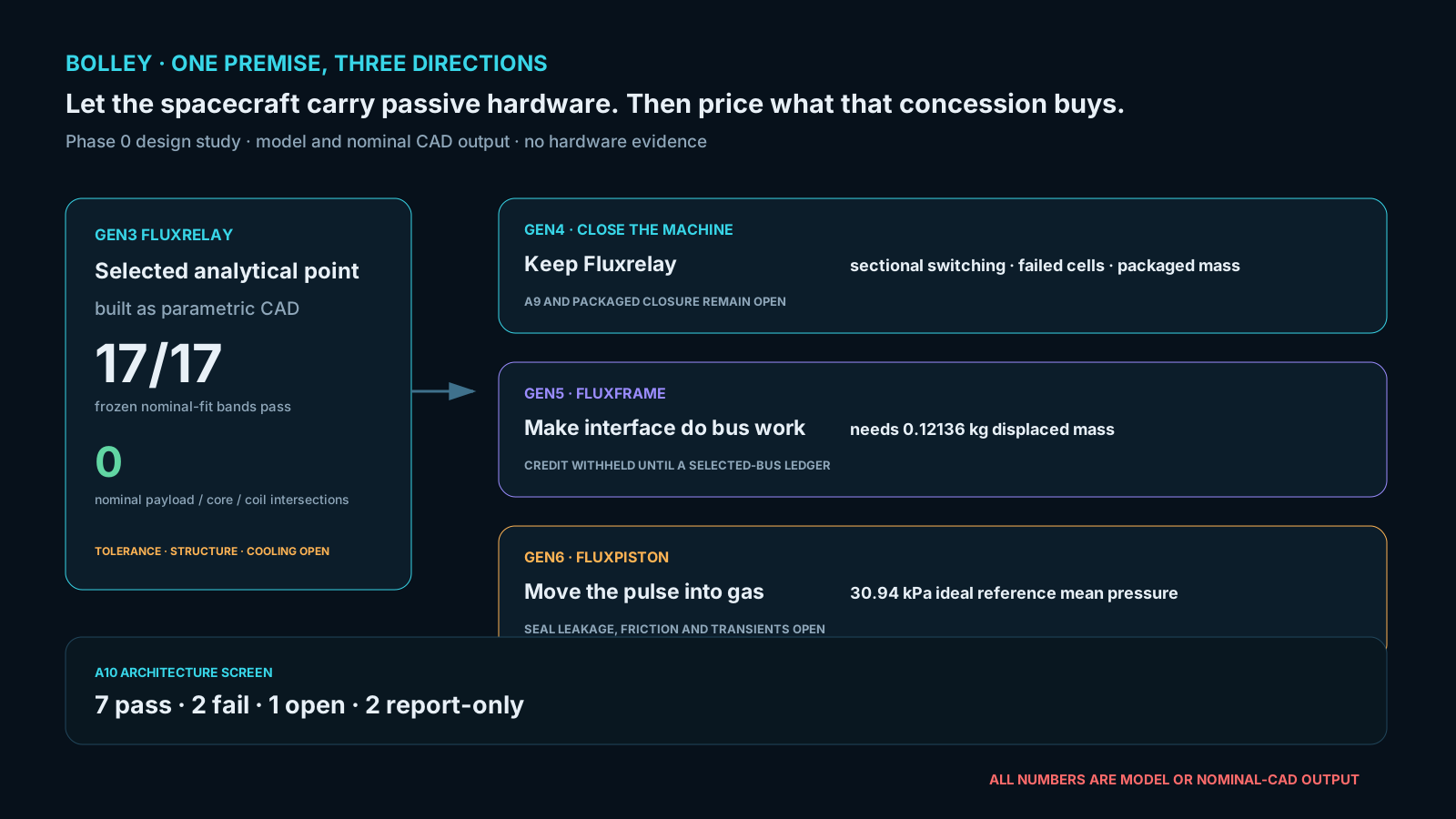
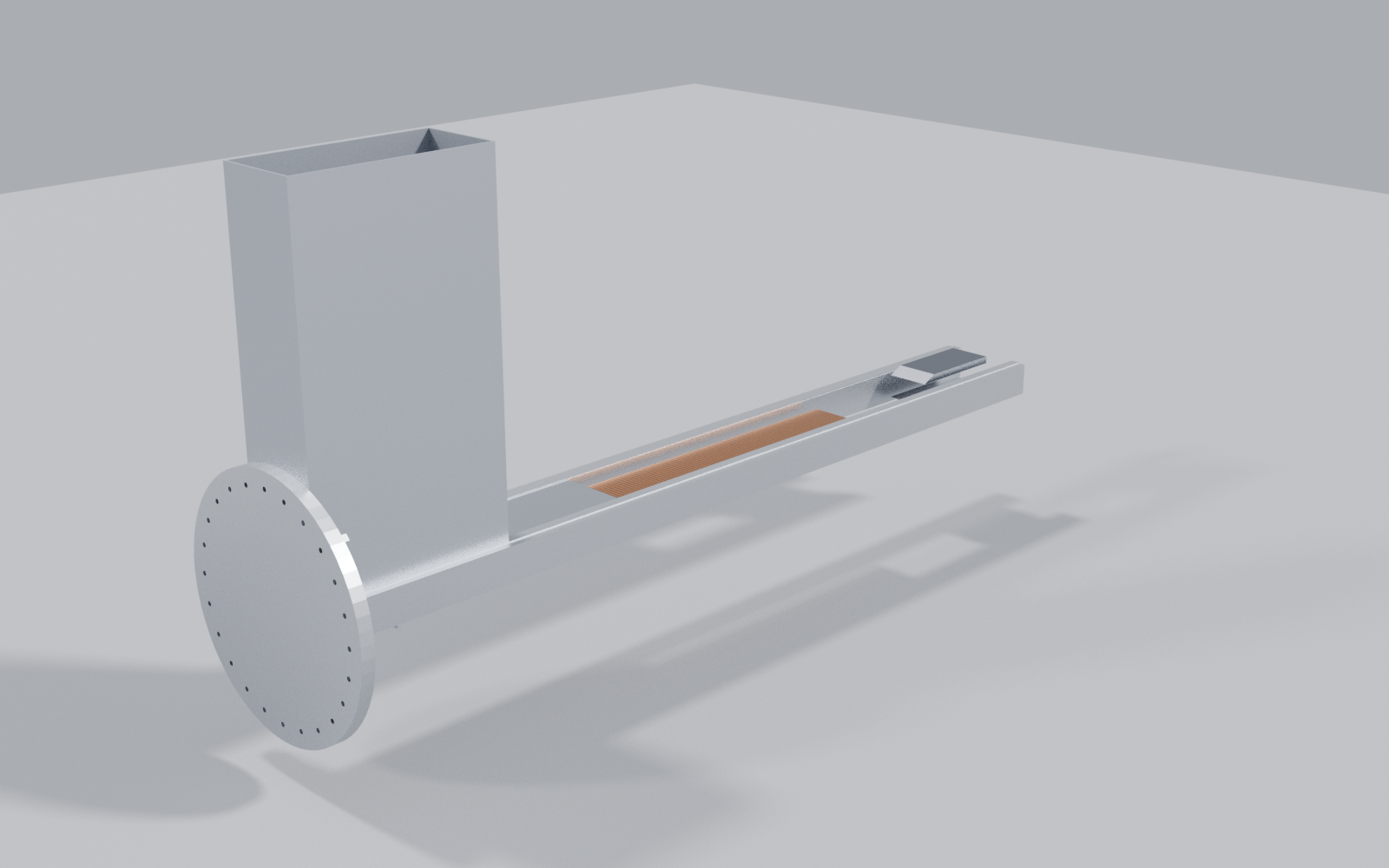
Exact nominal Gen3 CAD on the left; the generated architecture roadmap on the right. Both are model or nominal-CAD output, not hardware evidence.
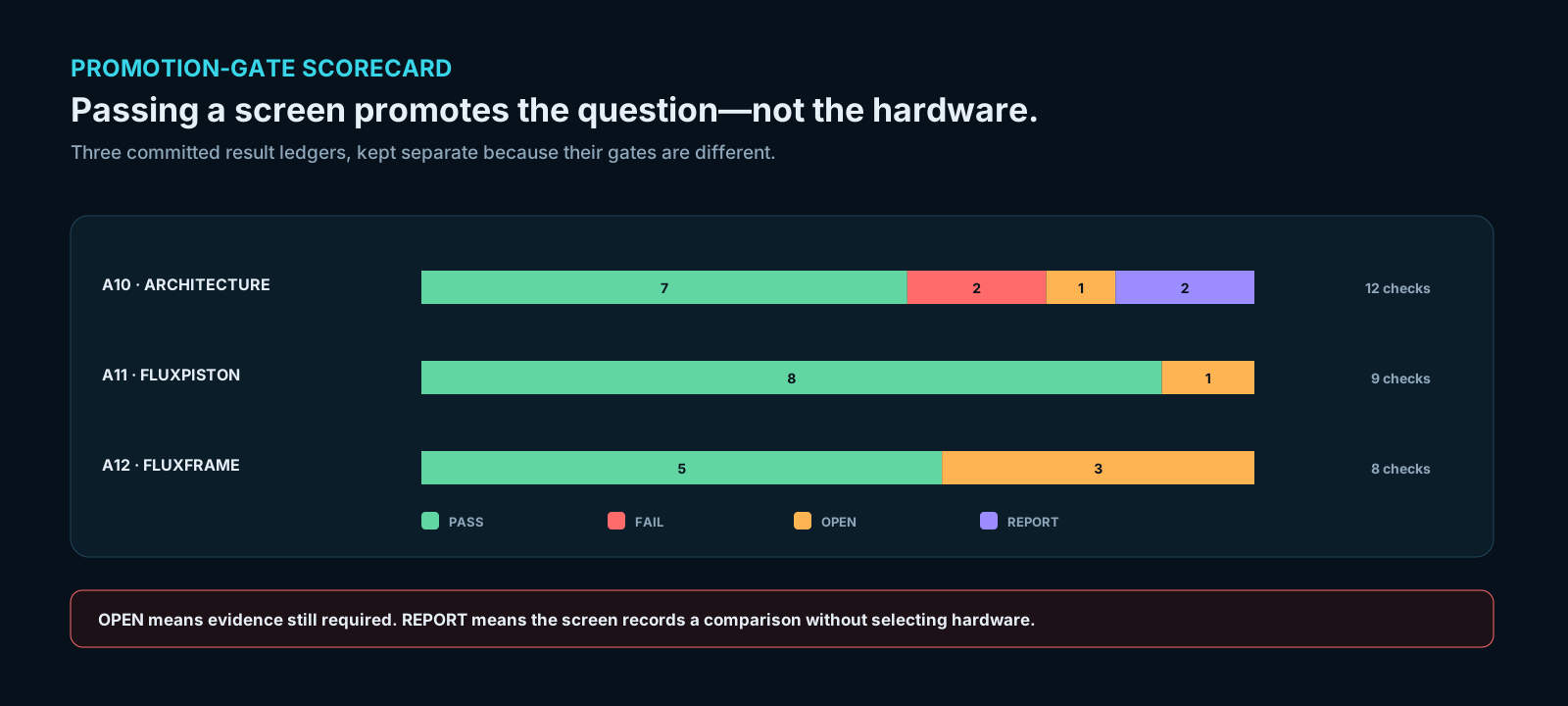
That habit is the actual portfolio: skills, with the file that proves each one
| VOLLEY | The authoritative engineering record. Start at docs/CONCEPT.md |
| VOLLEY-paper | The manuscript, IEEE-formatted, 18 pages, written and unsubmitted, and the reproducibility package |
| VOLLEY-thesis | Final-year submission |
| VOLLEY-lab | The vault: ideas that never became a complete thing, and why each stopped. Not citable |
| BOLLEY | The sibling study. Same standard, opposite premise: the satellite carries passive hardware so the launcher can delete its own |
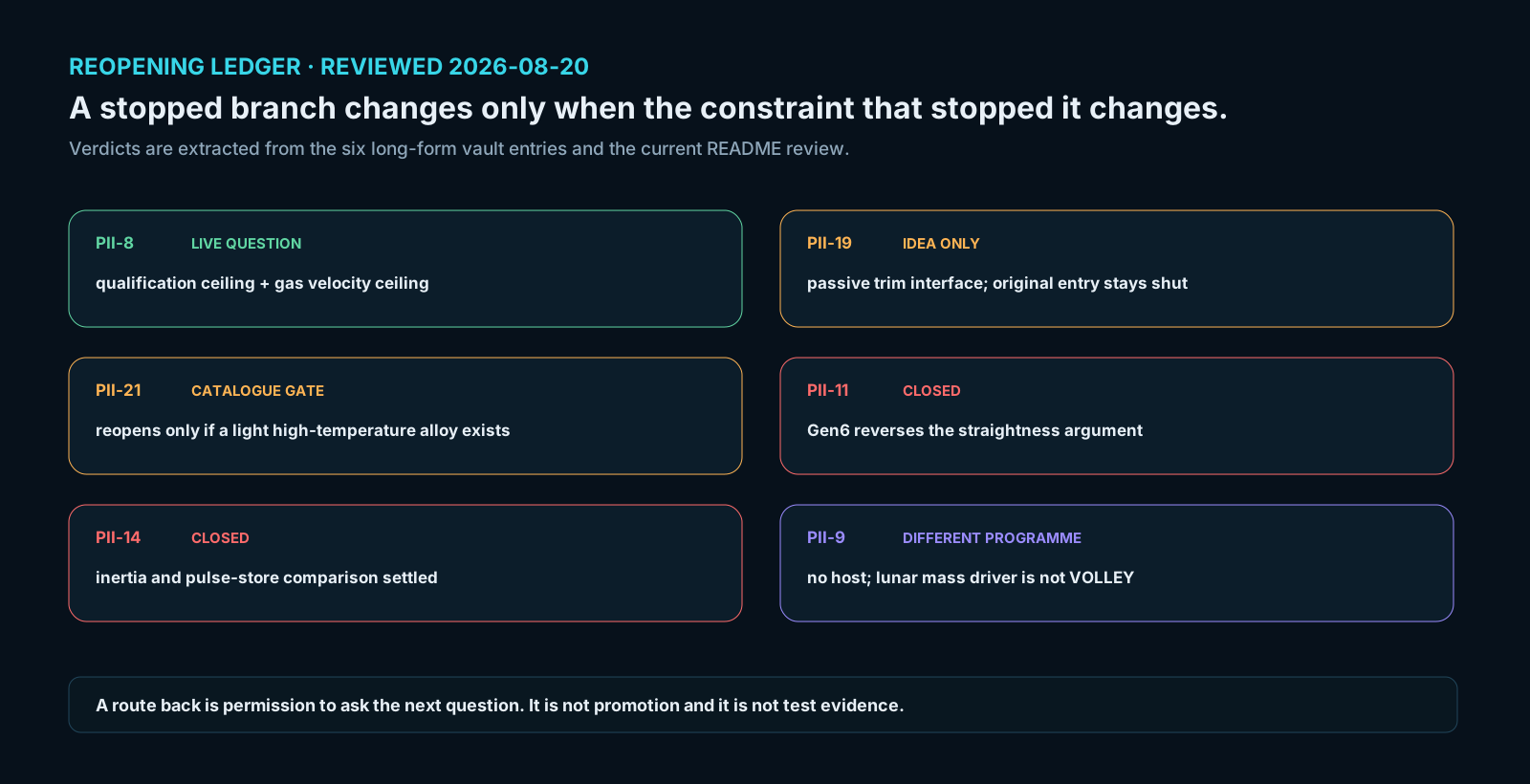
The lab is the programme's memory: rejected architectures remain attached to the constraint that stopped them, and are re-opened only when that constraint moves.
I pulled out the parts that still make sense without the spacecraft around them. Each repository keeps its VOLLEY source commit and file hashes, and each keeps the failed or void evidence beside the useful result.
| Repository | What it does | Boundary |
|---|---|---|
| Pulsed Linear Motor Design Lab | Screens force, stroke, moving mass, source impedance and energy | Constant-force model; no hardware validation |
| Engineering Evidence Toolkit | Checks finite results, local links, source presence and artifact hashes | Consistency is not physics validation |
| Orbital Deployment Trade Study | Screens tangential impulses, phase drift, recoil and internal-mass disturbance | Two-body and rigid-body only; not conjunction assessment |
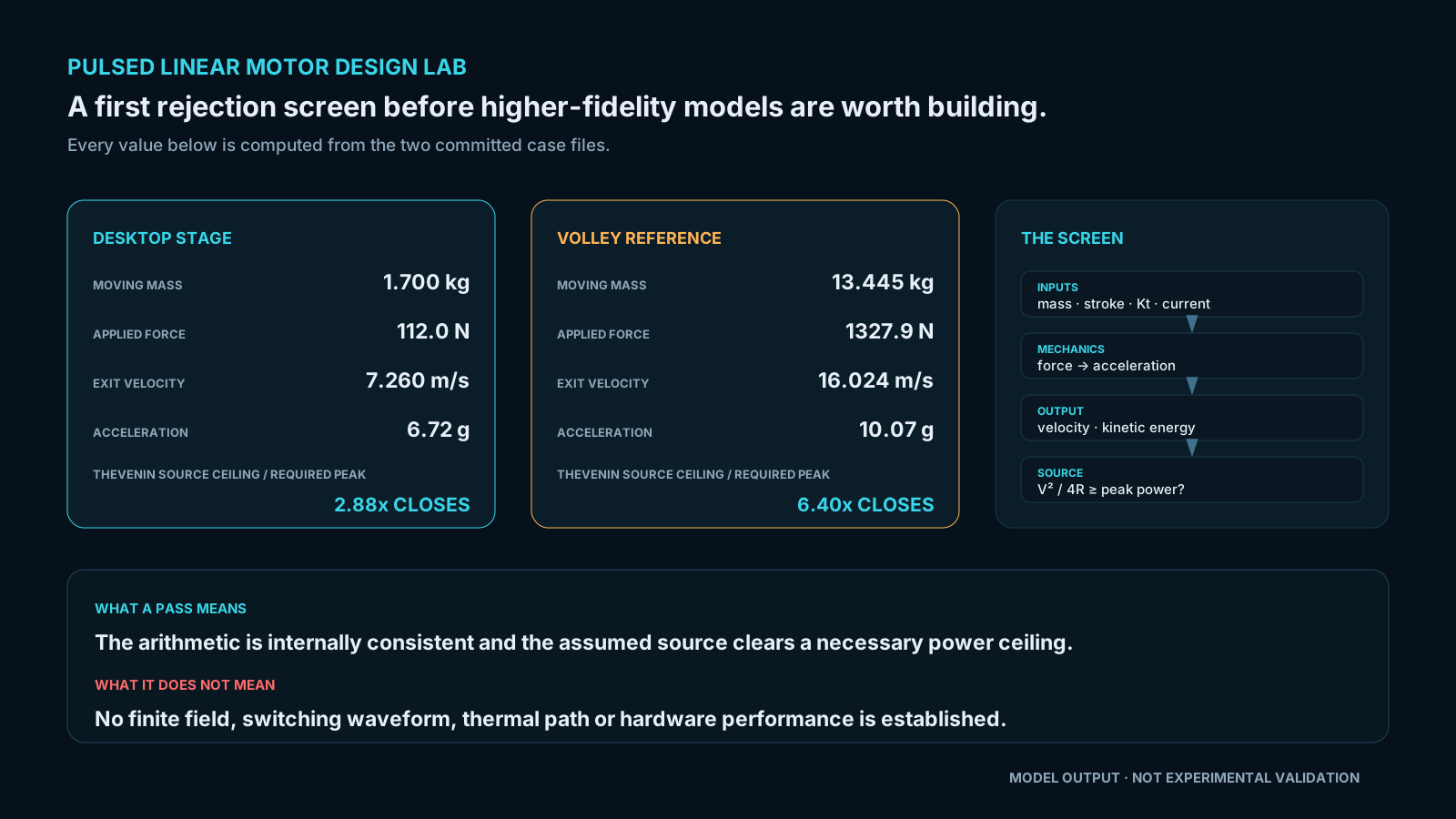
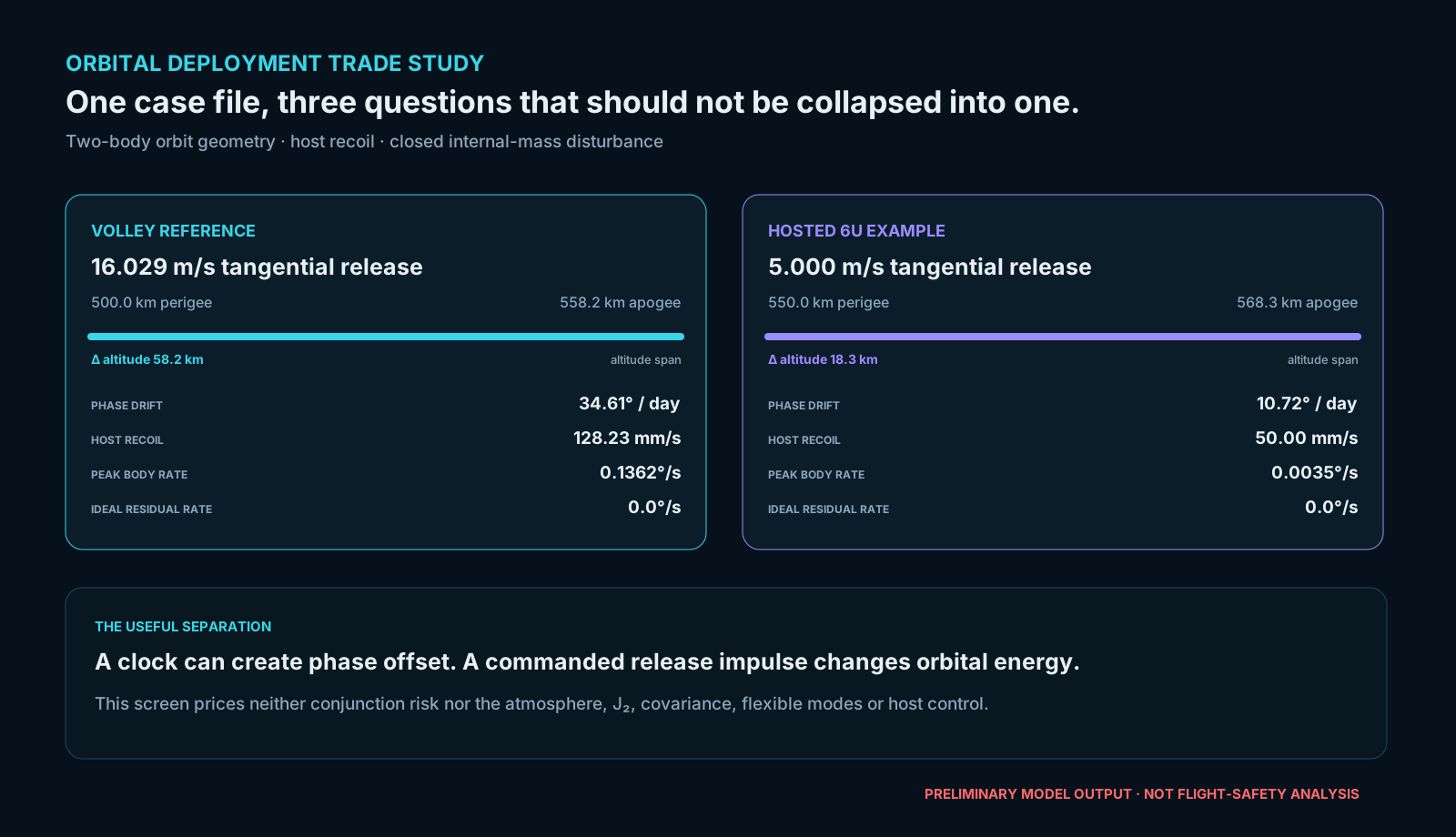
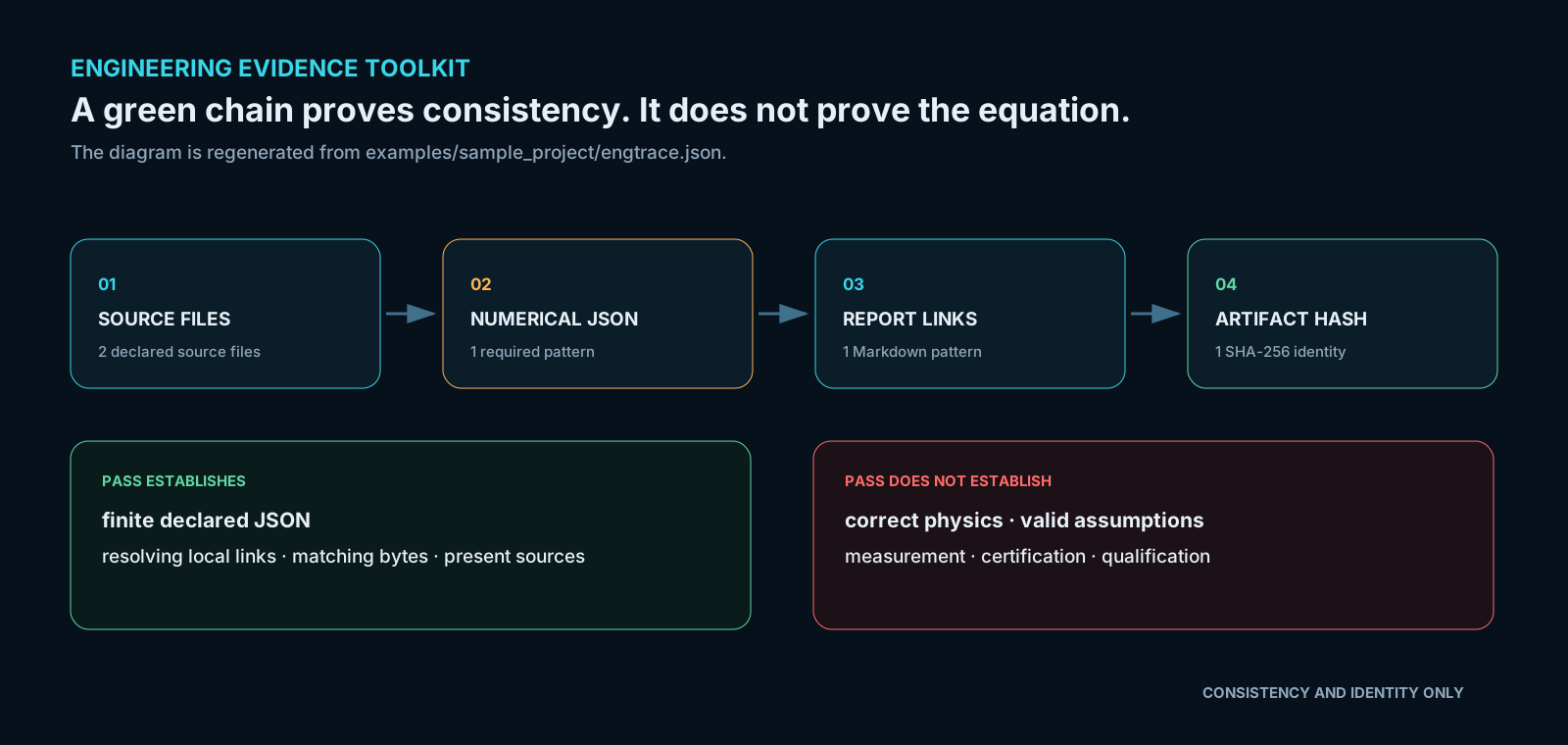
Each overview is generated by Python from its repository's committed cases or configuration. They are deliberately small tools, not miniature copies of VOLLEY.
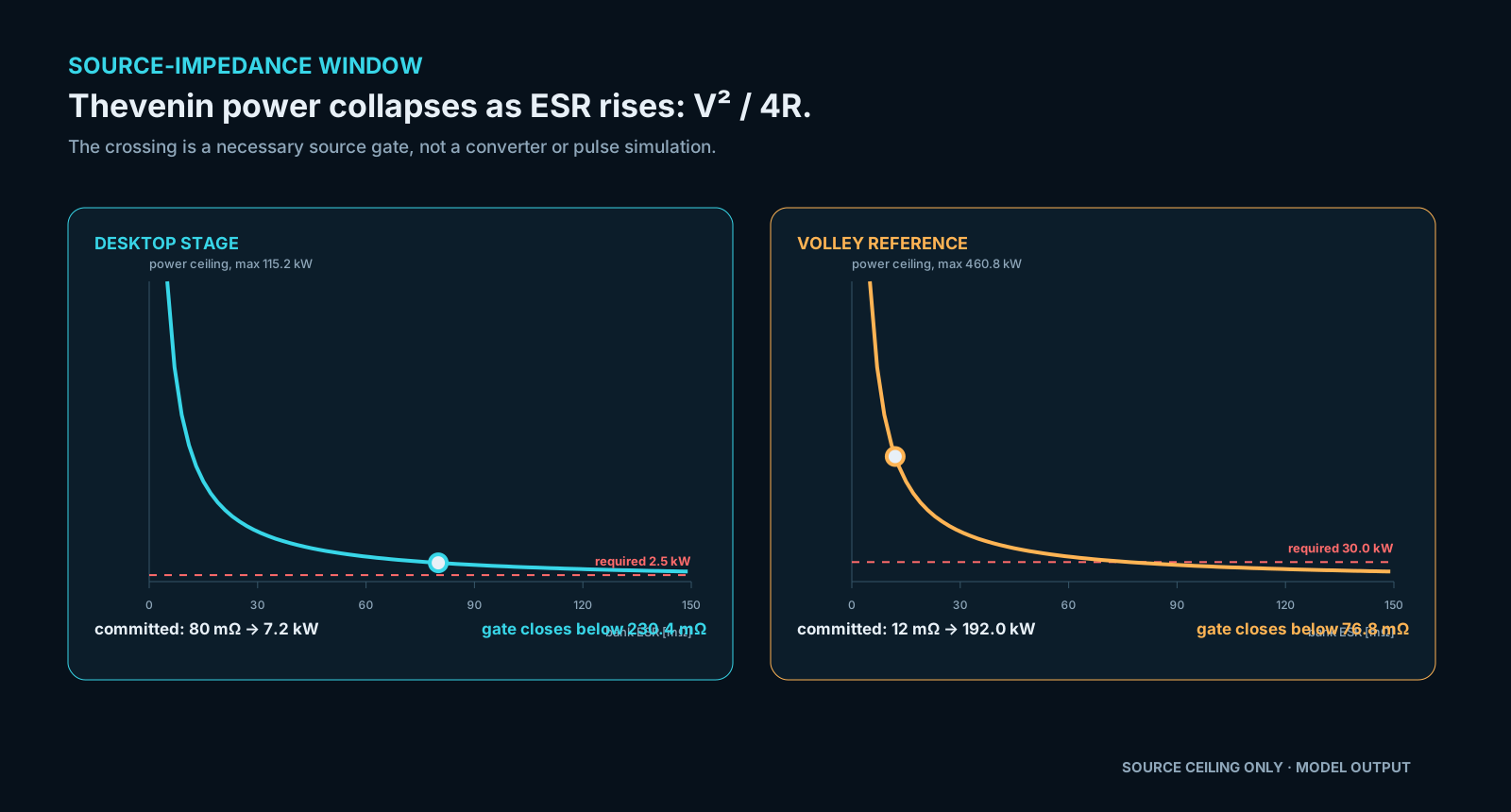
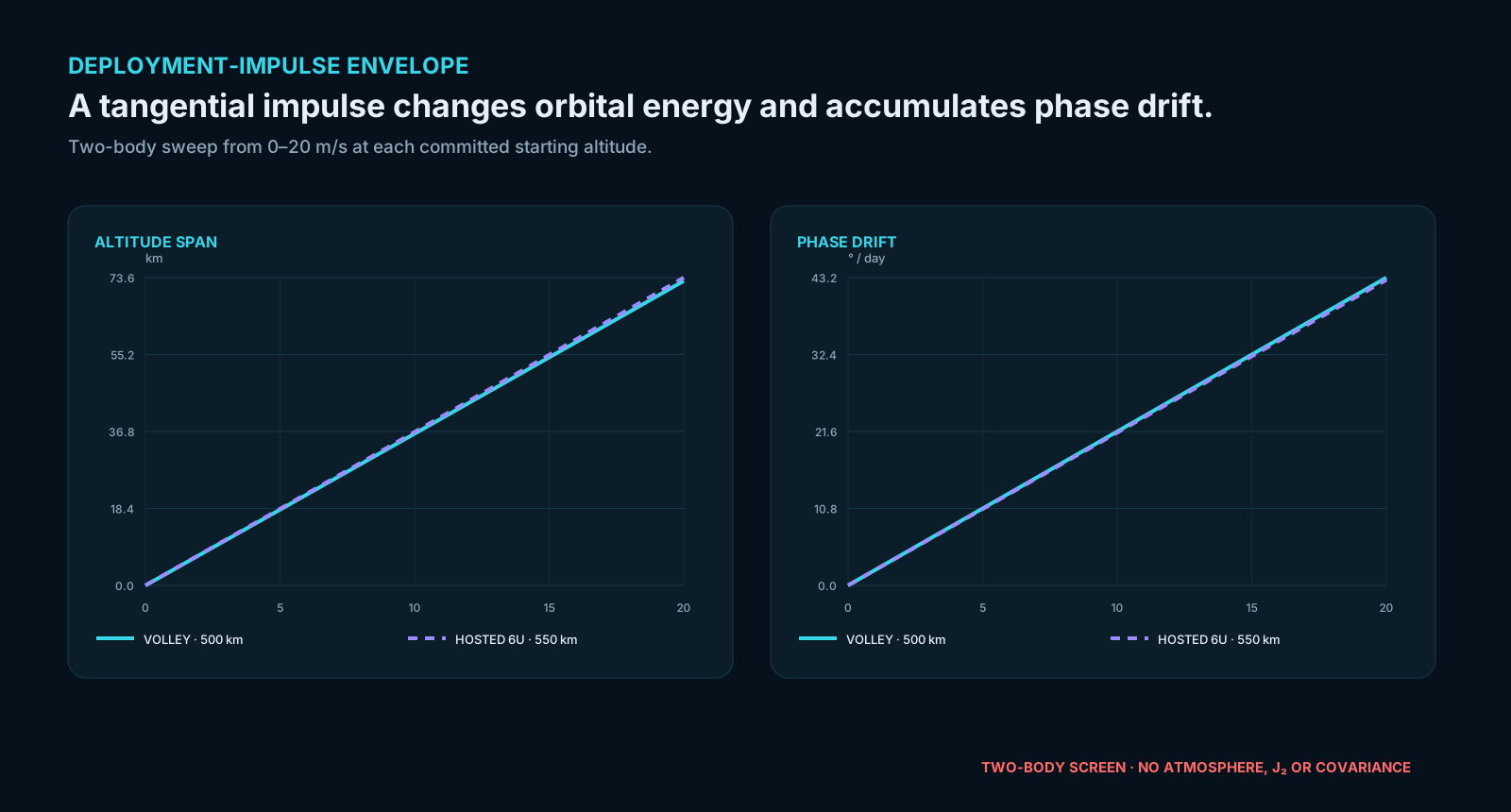
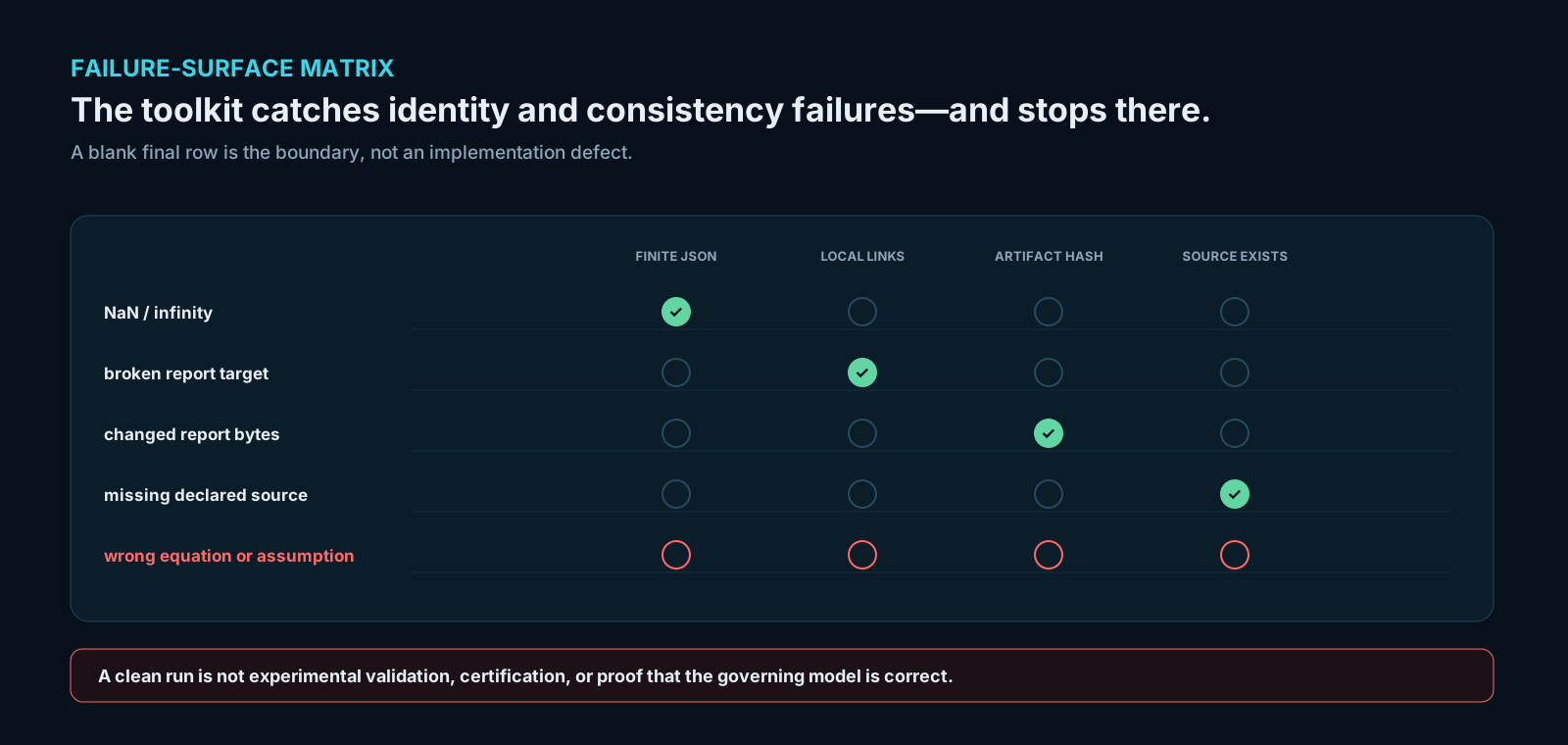
These are narrow libraries, not six new flagship projects. Each has executable Python, tests, a generated visual, and a provenance file that names the parent work and the claim boundary.
| Repository | Extracted capability | Parent work |
|---|---|---|
| constraint-floor | Additive lower bounds from requirement-attributed items | VOLLEY |
| parametric-cad-evidence-pipeline | Parameter, source, artifact, and SHA-256 build manifests | VOLLEY · BOLLEY · Engineering Evidence Toolkit |
| spacecraft-separation-dynamics | Impulse, recoil, tip-off, and internal-mass screens | VOLLEY · Orbital Deployment Trade Study |
| gatewaycx-bearer-sdk | Vendor-neutral bearer contract and conformance harness | GatewayCX |
| disruption-network-lab | Scheduled-contact earliest-delivery experiments | GatewayCX |
| scientific-run-registry | Content-addressed computational runs and lineage | Cross-project evidence method |
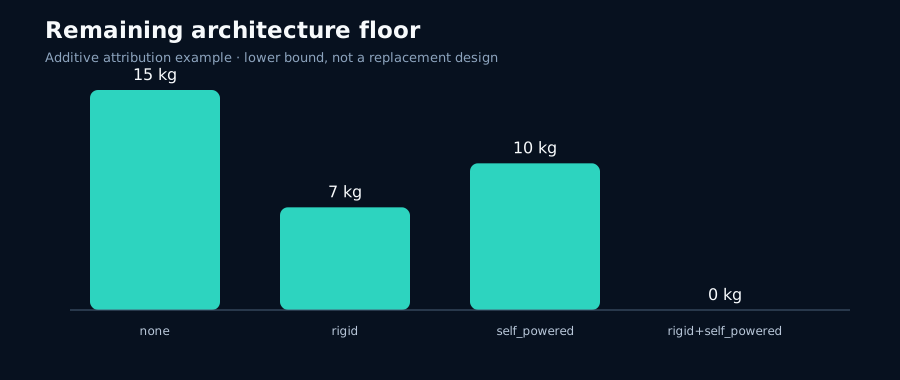
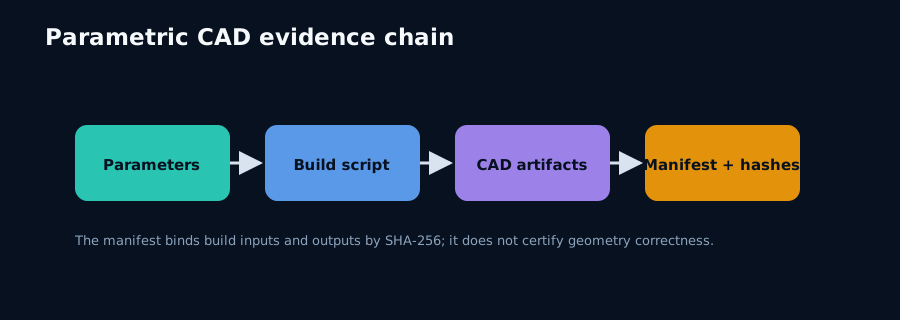
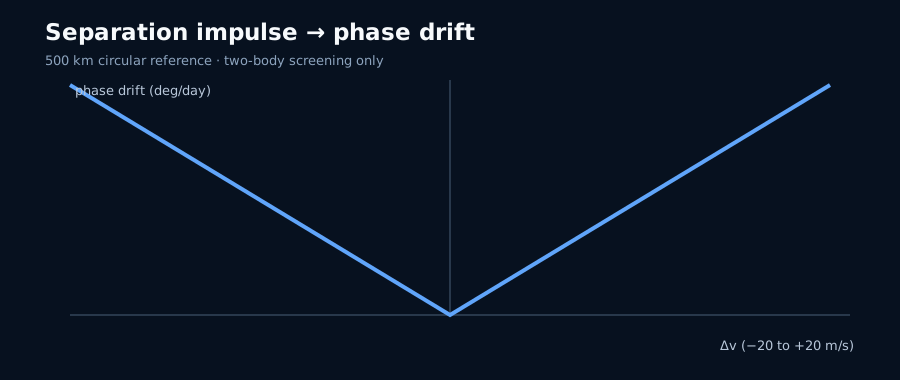
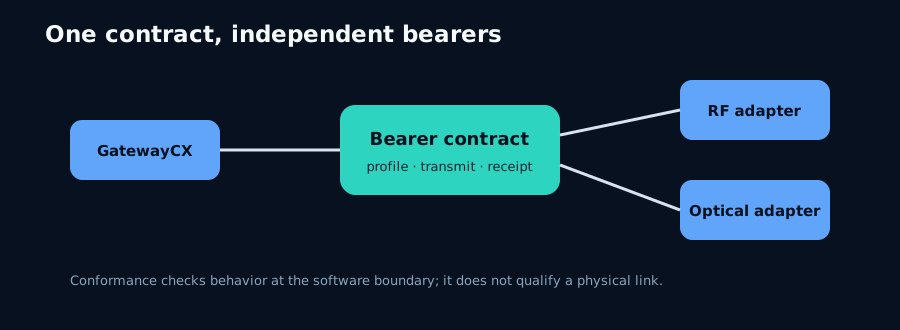
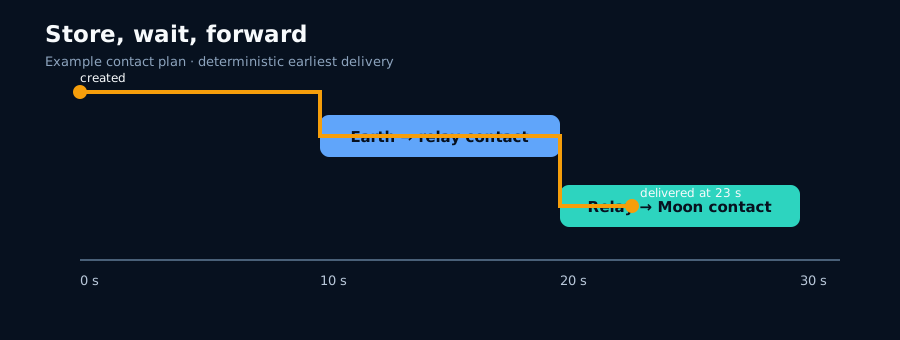
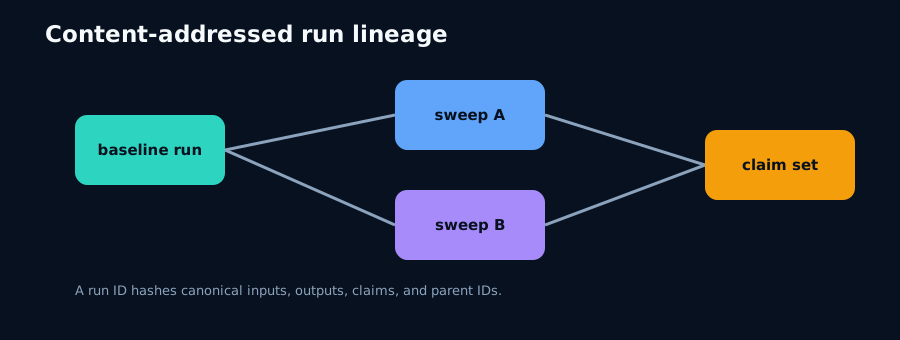
Every chart is generated by Python in its own repository. The visuals show the model boundary; they do not imply hardware or operational validation.
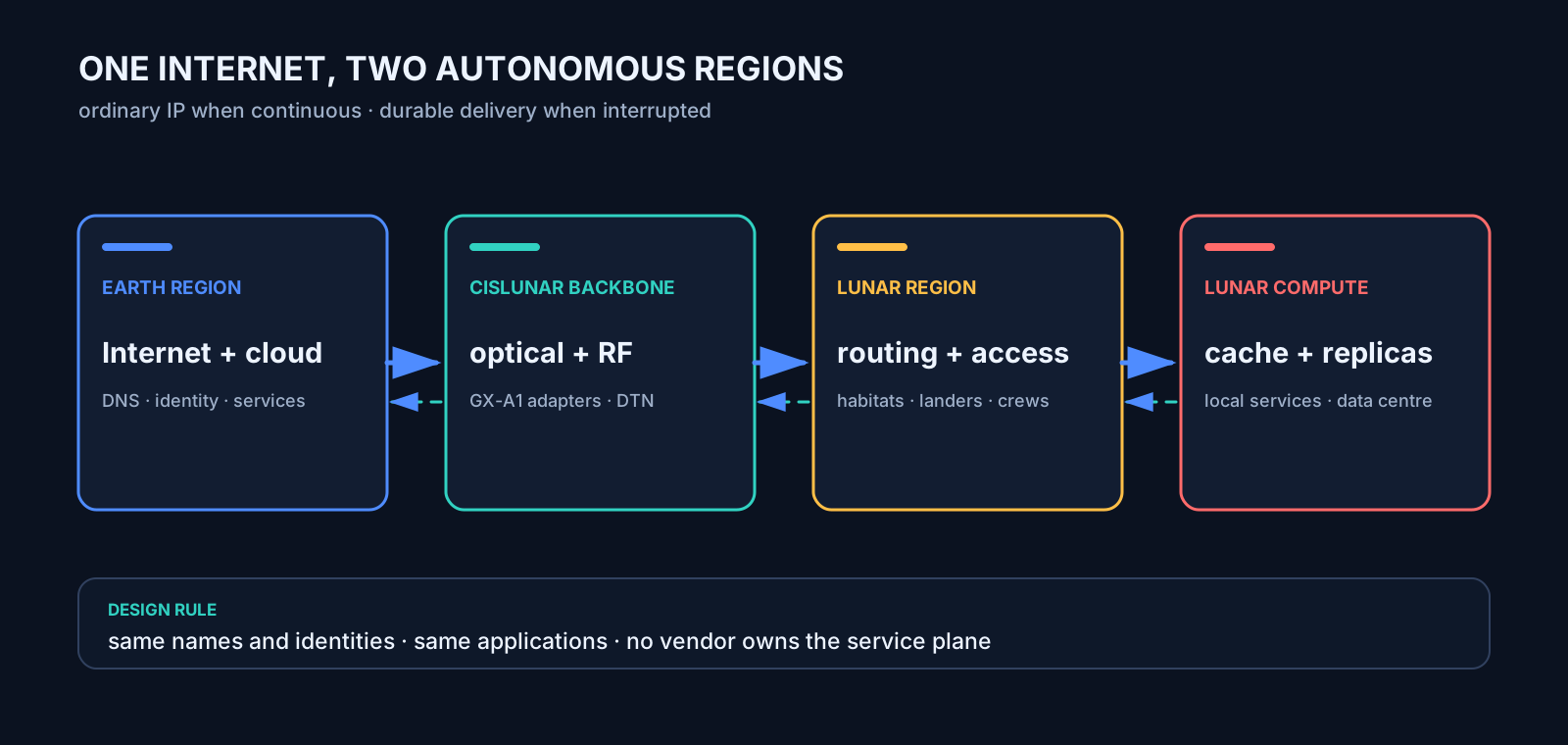
The question this time is less mechanical: if the Moon gets crews, landers and data centres, why should its network become a pile of mission-specific links. GatewayCX is an exploratory cislunar telecommunications architecture study I initiated at Avisys in April 2026. The end state is ordinary Internet semantics across Earth and the Moon, with the same names, identities and applications, while accepting the 2.565-second geometric round trip rather than pretending bandwidth can remove it.
The architecture treats Earth and the Moon as autonomous Internet regions joined by optical and RF bearers. Native IP stays where continuity permits; durable delivery takes over when it does not; lunar compute keeps local work local. The hardware seam is deliberately vendor-neutral. A terminal supplier implements the bearer adapter; it does not get to define the application network above it.
What exists today is software evidence: deterministic studies, a machine-readable bearer profile, an executable RF/optical adapter surface, a payload-blind SQLite traffic ledger and a local process-boundary binding. The restart test preserves 7,995,392 accepted bytes and partial progress across separate processes. None of that is a lunar link. No terminal has been connected, no vendor is a partner or dependency, and the repository says so on the front page.
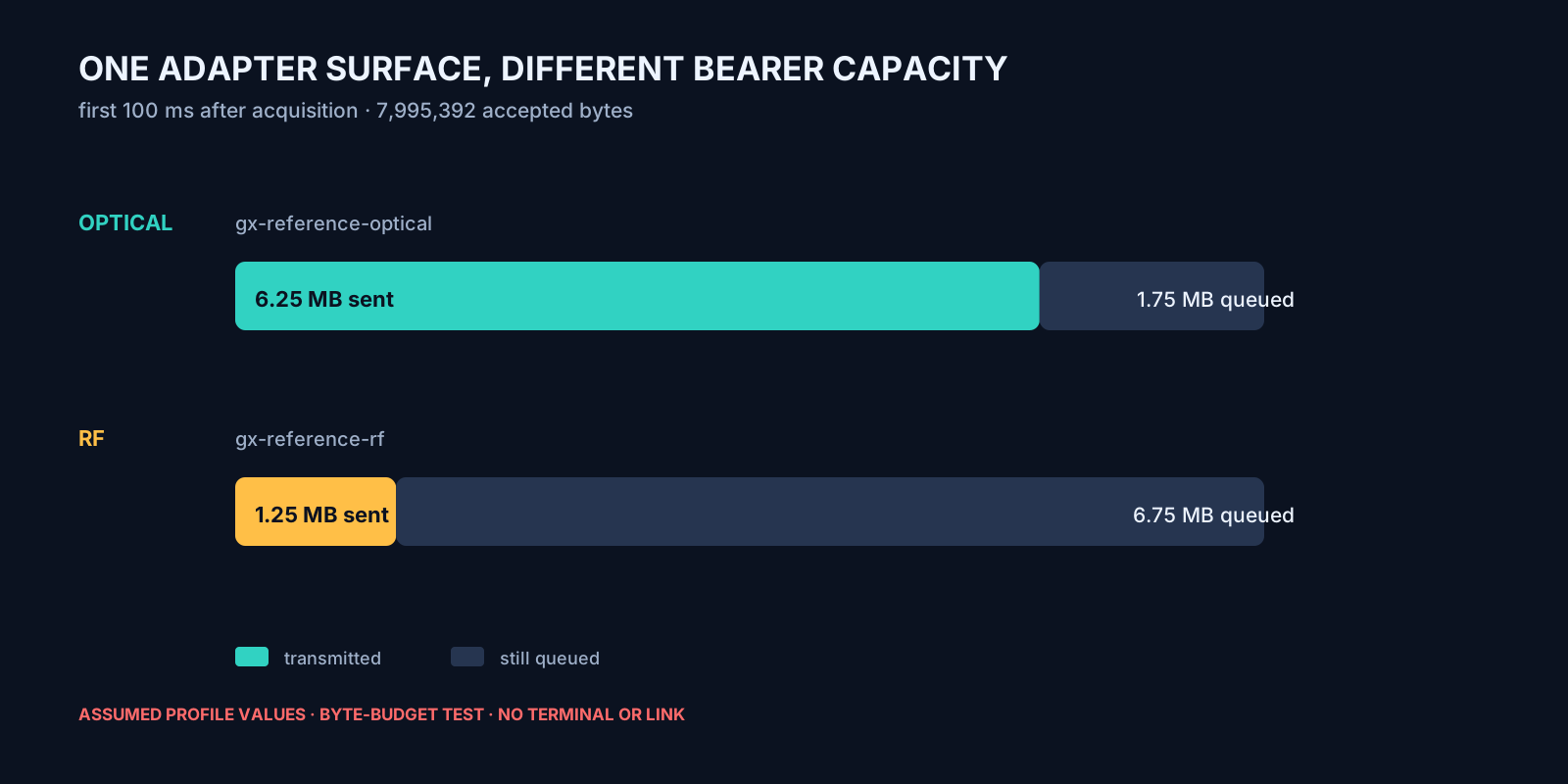
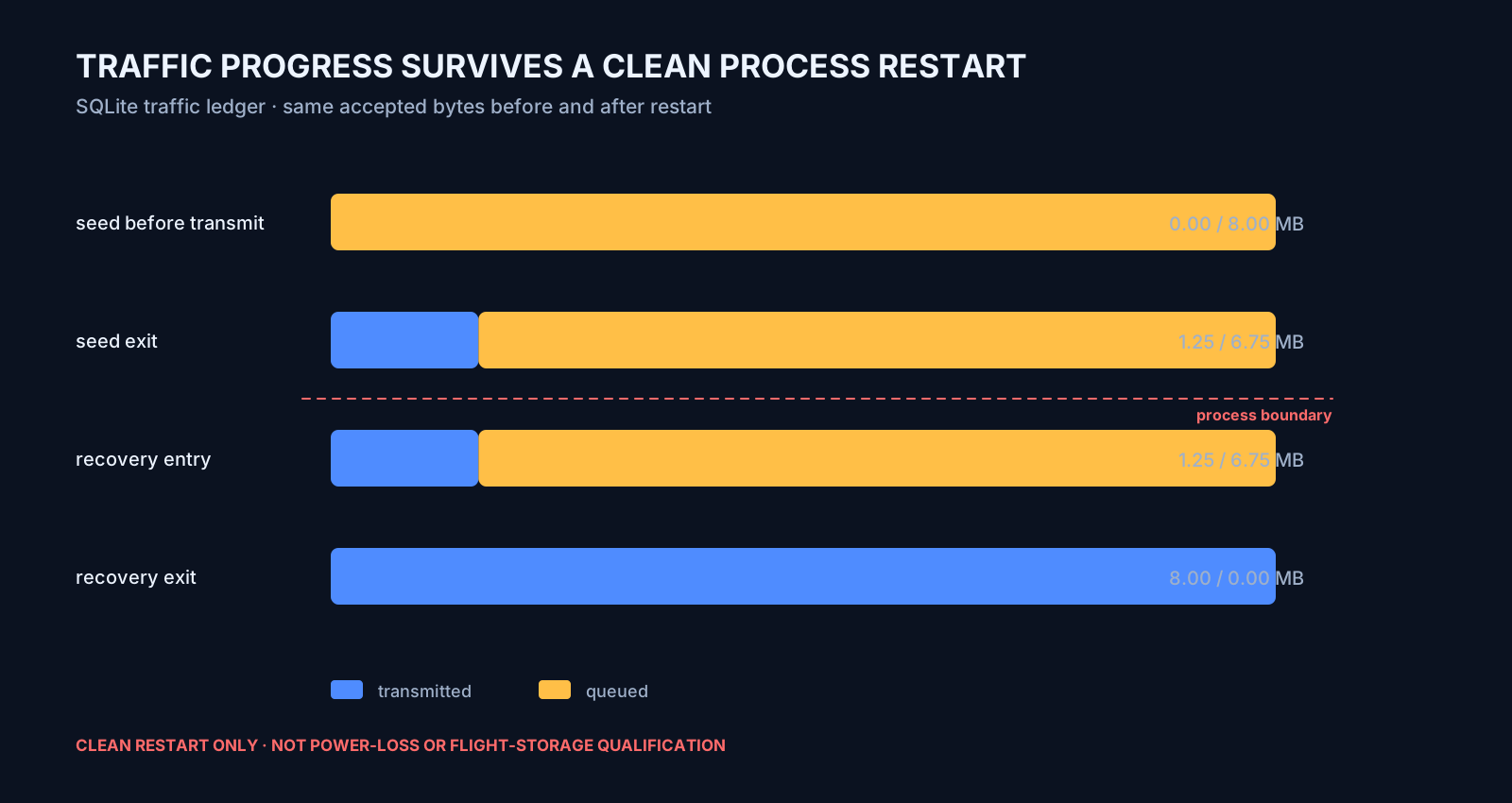
Both are generated from committed test results. Assumed bearer capacity on the left; a clean software restart on the right. Neither is hardware evidence.
| Work | What I actually did |
|---|---|
| IREC 2025 SDL payload | Helped Team THRUST's payload-deployment work; the payload placed 2nd globally in the SDL Payload Challenge in Texas |
| Motorcycle engine and ECU work | Combustion airflow, camshaft and exhaust work, ECU calibration, and a dual-map editor built after I reverse-engineered Powertronic's obfuscated map format |
| Formula Student powertrain | Powertrain work for my university team, where calculations have to survive packaging, manufacture, scrutineering and an actual car |
| Poona Motor Club | I run the club and use it to turn hands-on motorcycle work into technical public explanations rather than build-list theatre |
Simulation: scikit-fem, gmsh, GetDP, CalculiX, ngspice, GMAT, magpylib. I wrote a 2-D magnetostatic FEM from the weak form to check my own thrust constant; it agrees to 0.03% at the corrected operating point, the first time that number rested on a PDE solve instead of another superposition model.
CAD/CAE: Fusion 360, SolidWorks, AutoCAD, ANSYS. Three CAD generations of the deployer, all in the repository as STEP.
Engines: combustion airflow, head porting, camshaft profiling, ECU calibration. 46 to ~60 bhp on an RE Super Meteor 650, dyno-validated across the band.
Code: Python for numerics, traceability tools and engineering automation; MATLAB and C where the problem needs them. At work I own systems architecture and product design for a telecom CRM platform, which is not what I was hired to do.
Hindi and English native, Marathi, Maithili, Russian, French elementary. Friends call me AVM, pronounced how it's spelled, Aevium. Recognised by the ISRO Chairman for aerospace STEM outreach; member, Space Generation Advisory Council. Both are personal, and neither implies that any organisation endorses, approves or is involved in the engineering work above.
adityavardhanmishr@gmail.com · LinkedIn, Pune, India