
This project is to doc functions in Fire Emblem Series on Gameboy Advance:
- FE6: 封印の剣 / Binding Blade
- FE7J: 烈火の剣
- FE7U: Blazing Sword
- FE8J: 聖魔の光石
- FE8U: The Sacred Stones

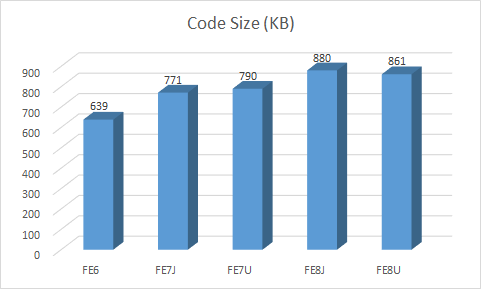
It is obvious that they share some source code. Here is my analysis result:

It can help hackers who does ASM/C hacking and make it easier to port engine hack between different games.
This library is powered by debug-info ELF builds from the GBAFE decompilation projects:
- FE6: The Binding Blade -
update.shreadsfireemblem6j/fe6.elfwithnm -lfor declarations and source-line links. - FE8U: The Sacred Stones -
update.shreadsfireemblem8u/fireemblem8.elffor FE8U declarations and links. - FE8J: 聖魔の光石 / Seima no Kouseki -
update.shreadsfireemblem8j/fireemblem8.elffor FE8J declarations and links.
update.sh refreshes the FE6, FE8U and FE8J decomp-derived function information from local
ELF builds. By default it reads:
../fireemblem6j/fe6.elf../fireemblem8u/fireemblem8.elf../fireemblem8j/fireemblem8.elf
Override those paths when needed:
FE6_ELF=/path/to/fe6.elf FE8U_ELF=/path/to/fireemblem8.elf FE8J_ELF=/path/to/fireemblem8.elf ./update.shFor a checkpointed serial refresh, extract one game at a time and finalize only after all intended symbol lists are ready:
./update.sh extract fe6
./update.sh extract fe8u
./update.sh extract fe8j
./update.sh finalize
An extract command runs nm exactly once for that game and does not generate
or validate the library. finalize performs generation, tests, and validation
without reading an ELF or invoking nm. Running ./update.sh without arguments
retains the original behavior in strict FE6, FE8U, FE8J, finalize order.
Each ELF must retain debug info so nm -l can map symbols back to source files and line
numbers. If an ELF has no source-line symbols (for example a debug-stripped build), that
game's list is left untouched instead of being overwritten with an empty file.
The update is atomic per symbol list and runs validate_library.py after generation. The
validator rejects malformed or ambiguous global symbols, confirms same-address aliases are
resolved deterministically, reports duplicate cross-game mappings, and verifies that
index.md is current.
- Decomp function symbols must be in the canonical GBA ROM window
0x08000000..0x09FFFFFF. Their Thumb bit is cleared only after that range check, so an invalid value such as0x18000001is rejected rather than coerced to0x08000000. multisym.txtmay also describe valid RAM, I/O, palette, VRAM, OAM, and SRAM addresses. Non-ROM odd addresses are data addresses and are never rounded down.- Multiple
multisym.txtrecords that identify the same normalized ROM address are merged in file order. Alias order is stable, duplicate spellings are removed, and no earlier aliases are overwritten.
functions.md contains legacy binary-match candidates. The generated index.md rejects
an entire candidate row when a per-game address occurs in multiple rows, or when a pinned
decomp identifies one of its symbols only with an address-derived placeholder (func_*,
sub_*, FUN_*, nullsub_*, and equivalent compiler labels). Rejected addresses are
retained exactly once as standalone rows; the generator never leaves the unverified
remainder paired or chooses an arbitrary duplicate.
The only automatic merge evidence is an exact, non-placeholder global name in the pinned
FE6J, FE8U, or FE8J decomps. The final-output validator checks every generated row for
balanced declaration links, unique names and per-game addresses, unique mappings, complete
source links, placeholder-free cross-game mappings, and represented multisym aliases.
Generated source paths are not accepted implicitly. The sole approved fallback is FE8U
src/data/chapter_settings.h to its tracked Inja template
src/data/chapter_settings.json.txt, which uniquely defines gChapterDataTable.
SOURCE_ROOT inputs are authoritative, and every other missing path remains an error.
For generated linker scripts, lyn reference assembly, and Event Assembler symbol include
files, use laqieer/FE-Clib-Decomp. This
repository stays focused on cross-game function documentation.
Feel free to contribute
Working on your first Pull Request? You can learn how from this free series How to Contribute to an Open Source Project on GitHub