
PriceVecta is a custom price monitoring platform that automates price collection from client-specified e-commerce, retail, and distributor websites. It continuously tracks product prices, stores historical records, and notifies users whenever pricing changes occur.
The image below shows the Flask dashboard displaying the historical price history of a monitored product.

PriceVecta eliminates manual data collection by combining automated web scraping with a web dashboard, historical analytics, CSV exports, and real-time alerts to provide businesses with actionable market insights, real-time competitive advantages, and data-driven pricing decisions.
| Feature | Description |
|---|---|
| Custom Automated Extraction | Continuous price and stock monitoring across client-specified e-commerce, retail, and distributor websites. |
| Visual Intelligence Dashboard | A clean, responsive interface viewing tracked products, current prices, and key monitoring metrics. |
| Historical Data Analytics | Data persistence layer that logs pricing history over time, enabling long-term trend analysis. |
| Data Export | Built-in capability to export historical pricing records to CSV for external reporting and business intelligence. |
| Instant Alerting Engine | Real-time Telegram and Email notifications immediately when price changes are detected, including the previous price, current price, and product link. |
| Scalable Data Pipeline | Built with Scrapy, Flask, SQLAlchemy, and Docker to support reliable, automated monitoring workflows. |
| Cloud-Based Scheduling | Automated scraping jobs deployed on Google Cloud Compute Engine using Linux cron jobs. |
PriceVecta is engineered to power data-driven decisions for:
- E-Commerce Businesses & Retailers: Dynamically optimize repricing strategies.
- Procurement Teams & Distributors: Monitor vendor compliance and identify cost-saving opportunities.
- Market Researchers & Competitive Intelligence Teams: Track long-term market trends and competitor behaviors.
PriceVecta is split into four core layers: Extraction, Storage, dashboard, and Infrastructure.
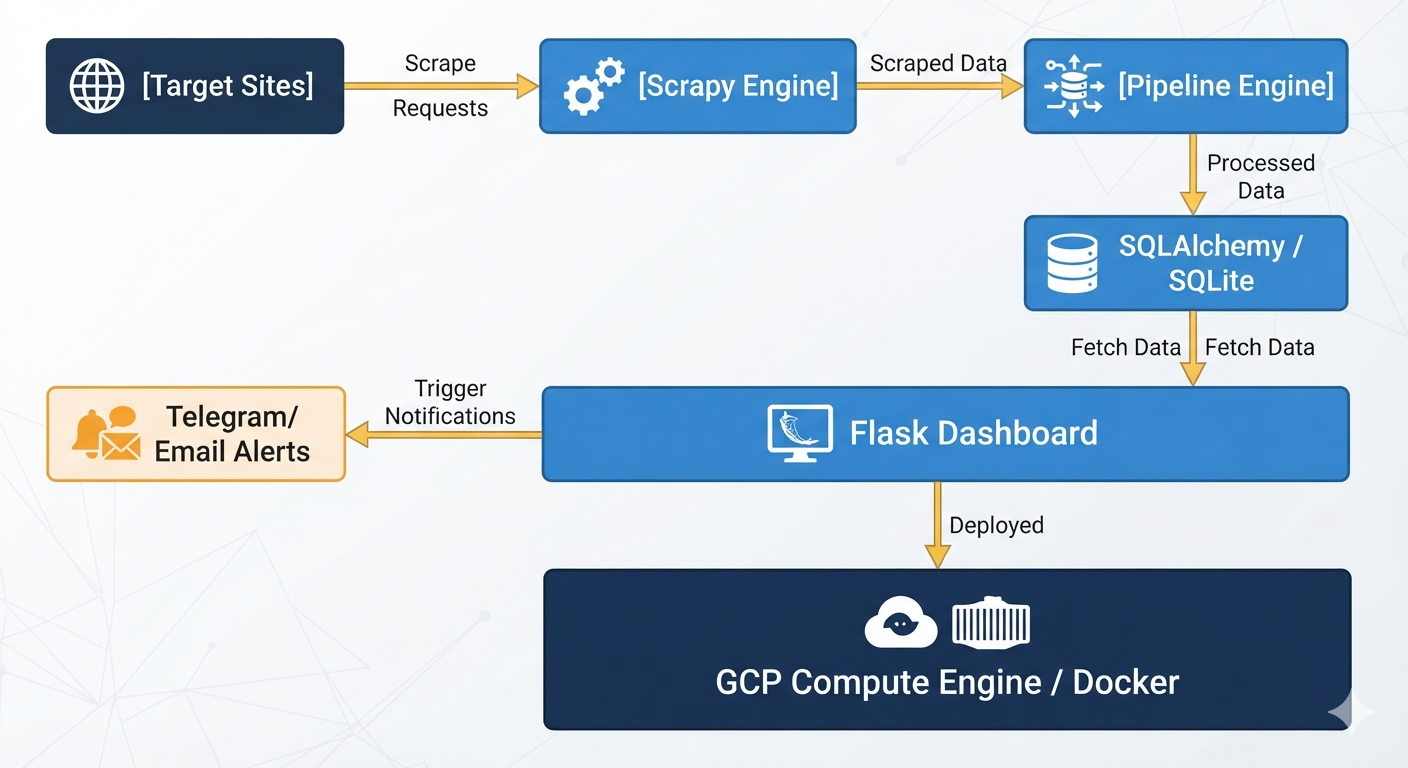
| Category | Technologies |
|---|---|
| Backend | Python, Flask, Scrapy, SQLAlchemy |
| Database | SQLite |
| Integrations | Telegram API, SMTP (Email Notifications) |
| Infrastructure & Deployment | Docker, Google Cloud Compute Engine, Linux Cron Jobs |
The dashboard provides a centralized view of monitored products, including:
- Total products tracked
- Highest recorded price
- Lowest recorded price
- Last update timestamp
Each product links directly to its historical pricing page, where users can review previous prices and export the data as a CSV file.
Whenever a scraper runs, newly collected prices are compared against the latest stored values.
The image below shows automated Telegram messages sent immediately after price changes were detected.
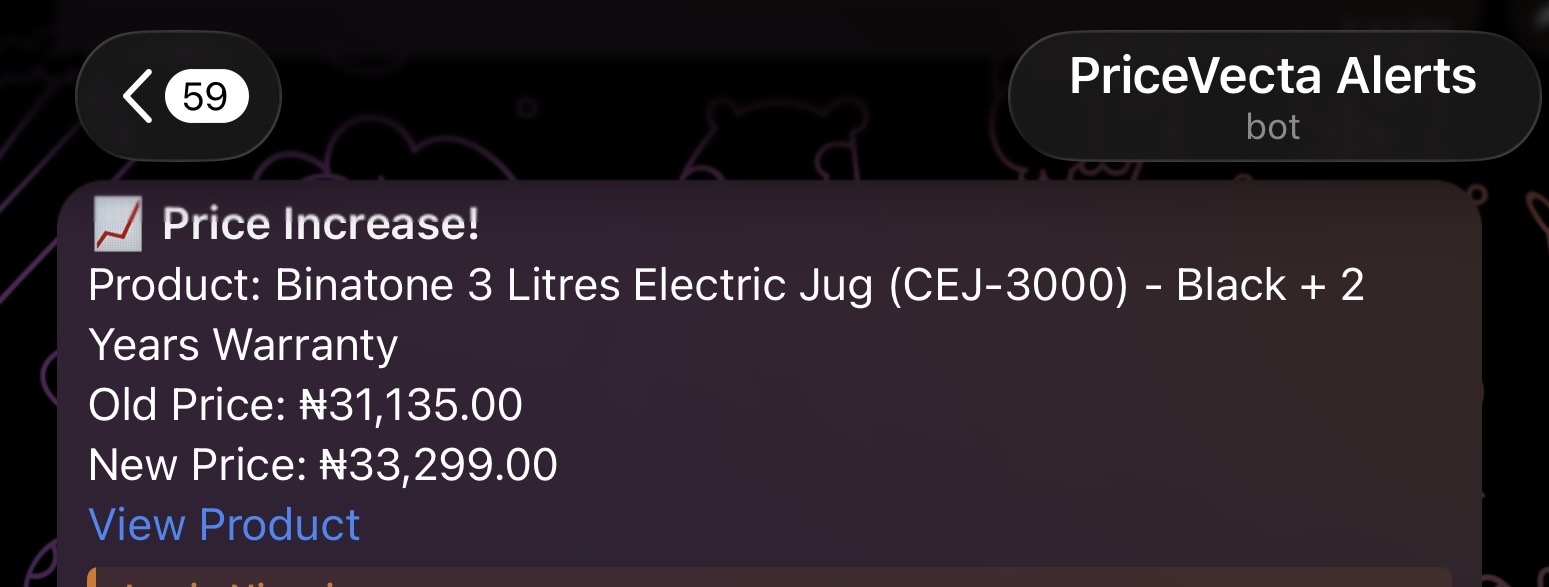
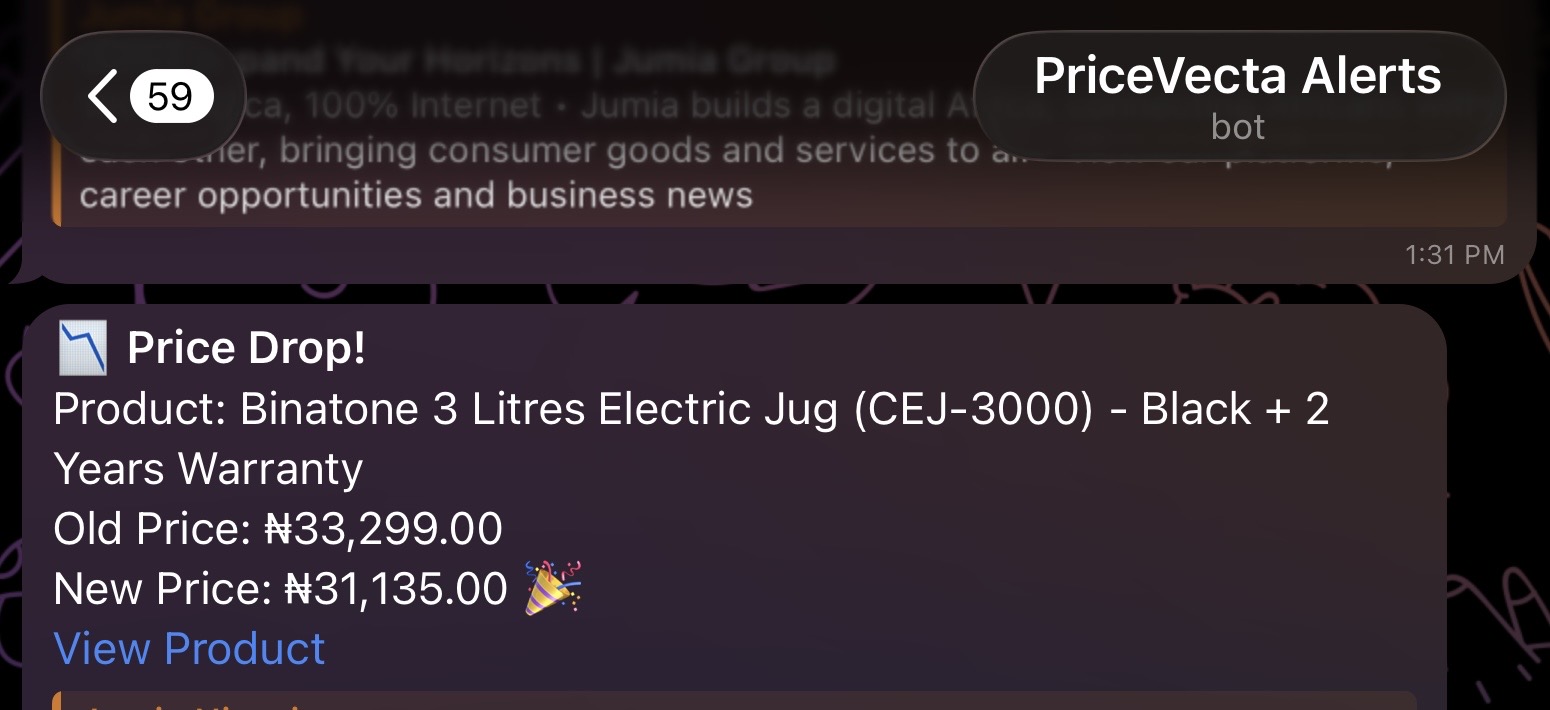
When a price change is detected, PriceVecta automatically:
- Records the new price in SQLite
- Stores the previous price history
- Updates the dashboard metrics
- Sends Telegram notifications
- Sends email alerts
Each notification includes:
- Product name
- Previous price
- Current price
- Product URL
-
Adaptive Target Structural Failovers: E-commerce architectures frequently undergo layout updates and minor frontend revisions that can break brittle parsing logic. To prevent pipeline downtime, the extraction engine utilises a defensive multi-layered data extraction strategy, prioritising semantic structural metadata and falling back gracefully to contextual arrays.
-
Pipeline Longevity & Network Optimisation: Web data acquisition at production scale requires strict compliance with remote server stability. The pipeline enforces request throttling, organic delay distributions, and custom profiling to mimic standard user agents. This ensures the scraping engine remains low-impact, respects target bandwidth limits, and avoids triggering automated rate-limiting flags.
- Automated price monitoring
- Historical pricing database
- Real-time alerts
- CSV exports
- Dashboard reporting
- Client-specific monitoring targets
- Containerized deployment
- Cloud-based scheduled execution
- Implementation of a visual configuration wizard allowing users to add custom targets directly from the UI.